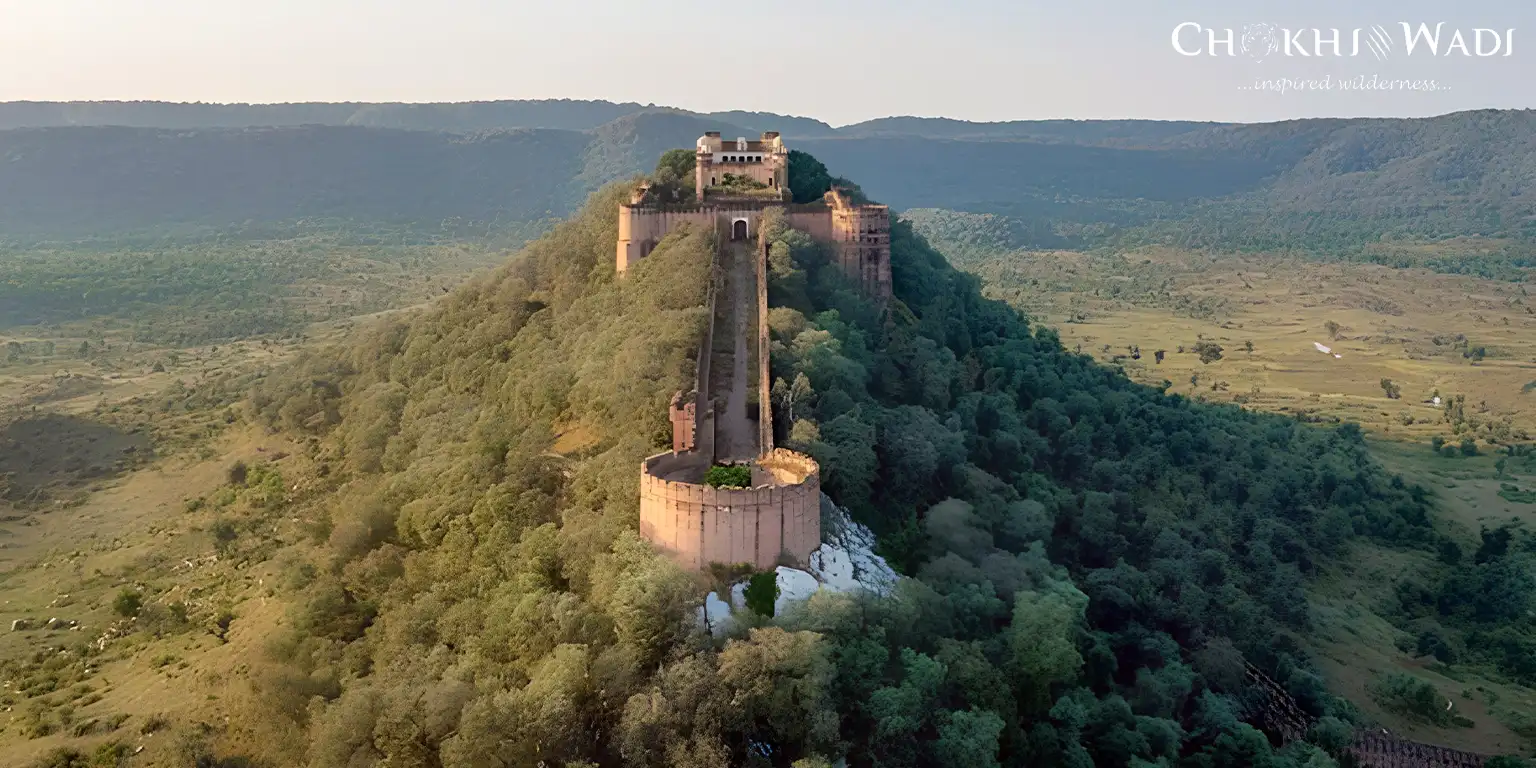
Where is Kankwari Fort and why do people travel deep into a tiger reserve to see it? Kankwari Fort sits inside Sariska Tiger Reserve in Alwar, Rajasthan, and it is famous as the place where Mughal prince Dara Shikoh was held during his war of succession with Aurangzeb. You can only reach it through a jungle safari, which makes this one of the few places in India where a piece of Mughal history and a genuine wildlife drive happen in the same trip. This guide covers the fort’s history, how to actually get there, and what else is worth seeing nearby.
What Makes Kankwari Fort Worth Visiting?
That single story of imprisonment is what draws most visitors here, but the fort offers more than history. The drive itself, past dense forest with a real chance of spotting a tiger along the way, becomes just as much a part of the experience as the ruins waiting at the end of it. Few places in Rajasthan combine Mughal history and a genuine wildlife safari in one visit quite like this one.
Where Is Kankwari Fort Located?
Kankwari Fort, widely regarded as one of the best tourist places in Sariska, sits inside the Tiger Reserve, in Kankwari village, Alwar district, Rajasthan. It stands on a hilltop in the middle of the forest, surrounded by the Aravalli hills on almost every side. The fort lies about 21 kilometres inside the reserve from the main Sariska Gate, deep enough that reaching it takes real effort, and that’s exactly the point. Its remote setting is part of why it was chosen for its most famous historical role in the first place.
The Story of Kankwari Fort: A Brief History
Historians differ slightly on the fort’s exact origins. Several sources trace its early construction to the Kachwaha rulers of Amber, though accounts differ on whether this was Jai Singh I or the later Jai Singh II. Its main structure is generally placed in the 17th century, the height of Mughal influence in North India. What almost every account agrees on is the fort’s most significant moment: the imprisonment of a Mughal prince during a brutal war of succession.
This single episode gave the fort a place in Mughal history far beyond its size or grandeur. Local memory of the story remains strong even today, and it is part of why the fort continues to draw curious visitors from across India.
Dara Shikoh at Kankwari Fort
Kankwari Fort, set deep within Sariska Tiger Reserve, is tied to Dara Shikoh, Emperor Shah Jahan’s scholar-prince son. Known for translating Hindu texts and promoting interfaith dialogue, he was the heir-apparent until defeated by his orthodox brother Aurangzeb at the 1658 Battle of Samugarh.
Following his defeat, Dara Shikoh was confined at Kankwari Fort. Its remote isolation made it an ideal site to securely hold a prince of his stature and prevent rescue attempts. Contrary to popular legends, he was not executed here; he was later moved to Delhi, where he was executed on Aurangzeb’s orders in 1659. Today, the isolated ruins serve as a poignant reminder of this brief, dramatic period of his imprisonment during the Mughal succession war.
Kankwari Fort Architecture & What You Can See
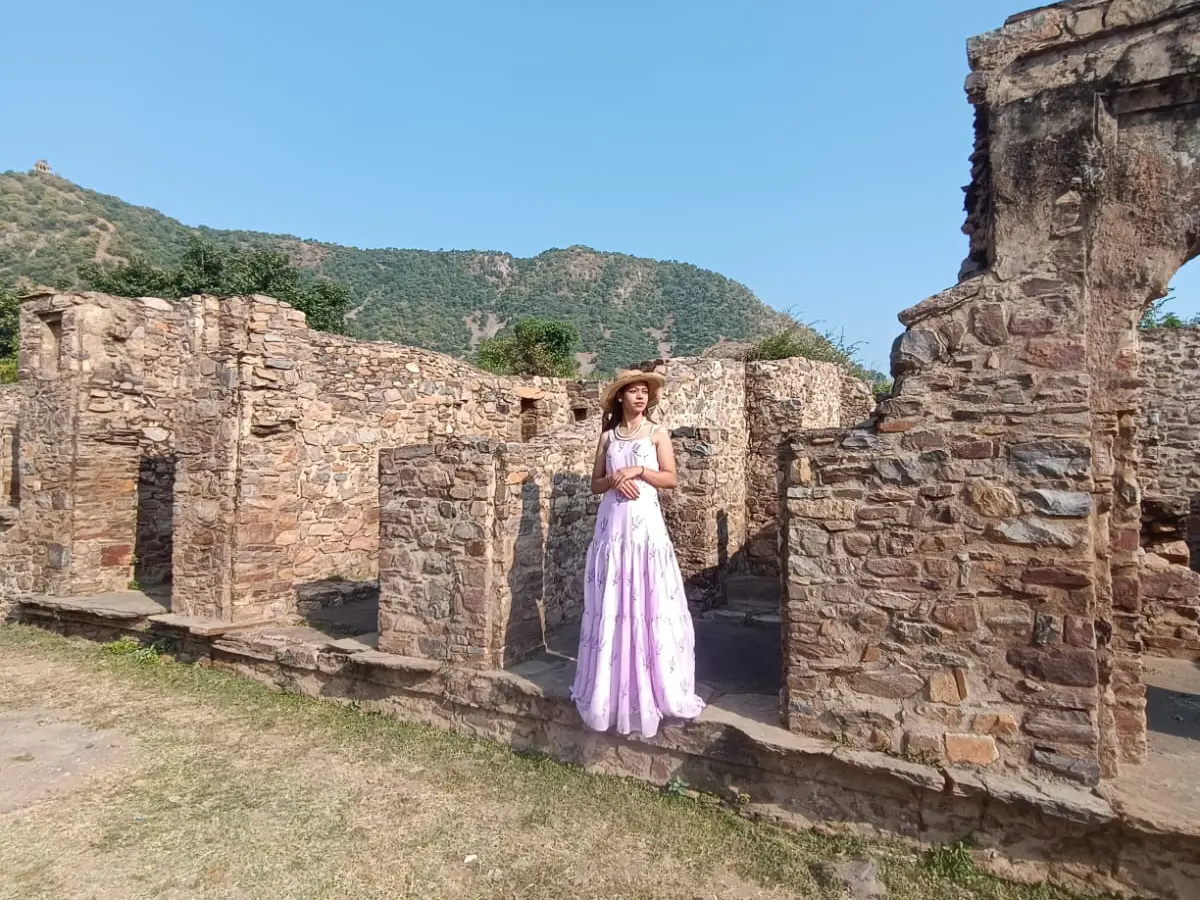
Kankwari Fort stands on a hilltop, encircled by thick stone ramparts that were reportedly built up further during Dara Shikoh’s imprisonment, giving the site an extra layer of security at the time. Today, much of the interior lies in ruins, but enough remains to get a real sense of the fort’s original scale.
What you’ll see includes:
- Sturdy outer walls and the remains of large entrance gateways
- Old rooms and connecting hallways, some still showing faint traces of carved detailing on the walls
- Open courtyards, balconies, and gallery-style spaces that would once have looked out over the forest
- A small lake visible from the fort in certain seasons, adding to the view
- Sweeping panoramic views across the Aravalli hills and the surrounding tiger reserve
There are no restored interiors or museum-style displays here, and no signage explaining each section in detail. What you get instead is an untouched, quiet ruin, largely left as history left it, which is a big part of its appeal for visitors who’ve already seen more polished, heavily restored forts elsewhere in Rajasthan.
Why Was Kankwari Fort Built in the Middle of the Forest?
This is one of the more interesting questions visitors ask, and the answer comes down to strategy. A fort built deep inside a dense forest, on a hill surrounded by rough terrain, is naturally hard to reach and even harder to escape from. That made it an ideal location for holding a prisoner of Dara Shikoh’s importance, far from easy rescue, and difficult for outside forces to approach unnoticed. The forest wasn’t just scenery. It was part of the fort’s defence.
Kankwari Fort and Sariska Tiger Reserve: What’s the Connection?
Kankwari Fort sits entirely within the boundaries of Sariska Tiger Reserve, which makes it one of the more unusual heritage sites in India. You cannot visit it separately from the reserve itself. The fort falls along one of the reserve’s official safari routes, alongside stops like Kalighati and Neelkanth Mahadev Temple, so your visit to the fort happens as part of a wider wildlife drive rather than a standalone historical tour.
This connection is exactly what makes Kankwari Fort special. You are not just visiting a ruin. You are driving through active tiger territory to reach it, with the same forest that once made the fort a secure prison now home to one of India’s most important tiger conservation stories.
Kankwari Fort Safari Route & What to Expect
According to the reserve’s official route listings, the road to Kankwari Fort runs as follows: Sariska Gate to Kalighati, then Kabri Gate, then Kankwari itself, continuing to Neelkanth Mahadev Temple before looping back through Tehla. A second version of the route starts from Tehla Gate and runs through Kabri Gate to Kankwari and Neelkanth Mahadev before returning.
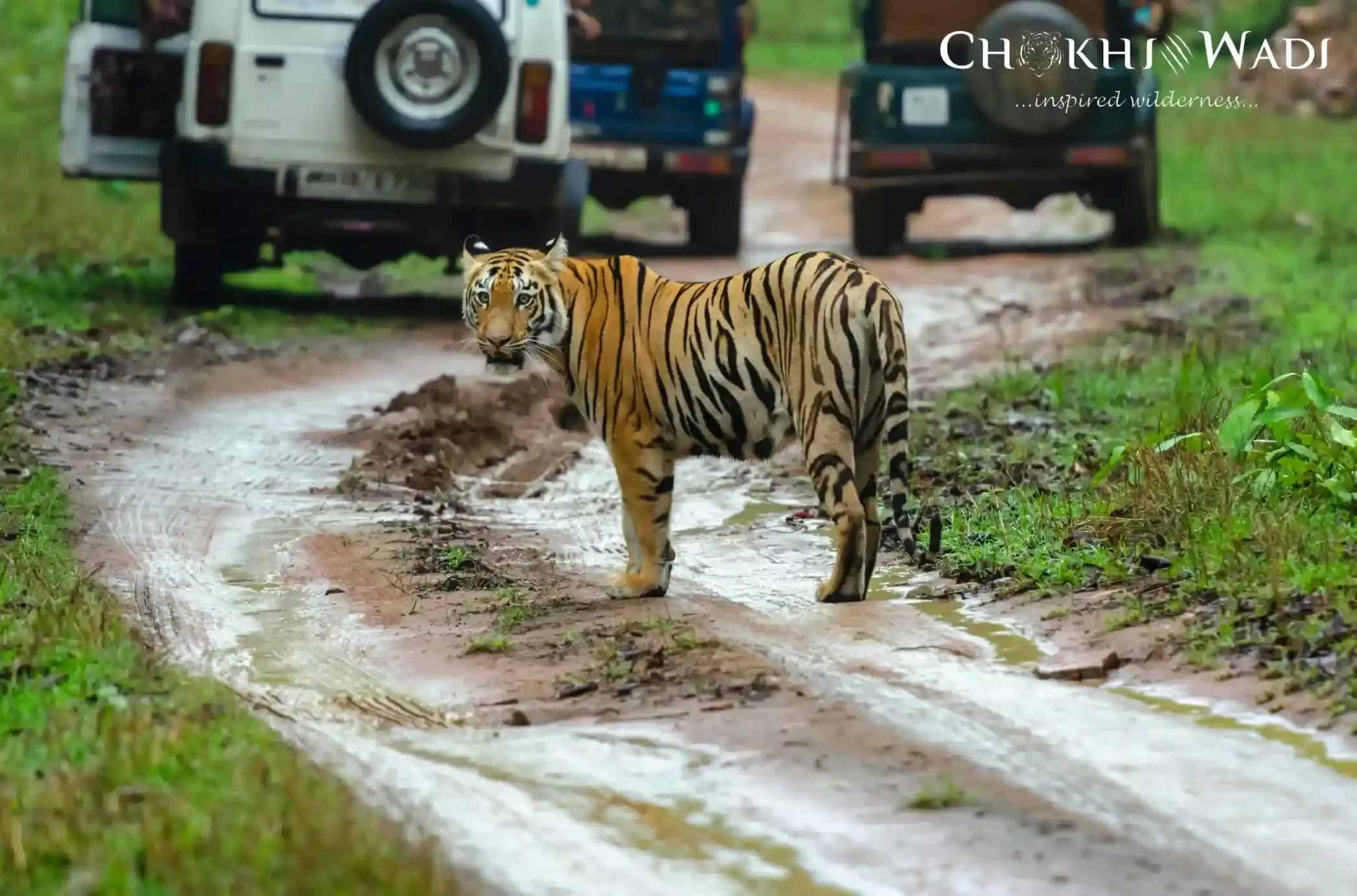
The drive itself is part of the experience, and it isn’t a quick one. Expect a long, winding, occasionally bumpy stretch through dense forest; along the way, you’ll pass small rural hamlets offering a glimpse of local Rajasthani village life. There’s also a genuine chance of spotting nilgai, deer, or other wildlife before the fort even comes into view.
Because the terrain gets rough, this route is usually covered by Gypsy rather than a larger canter vehicle. The fort itself isn’t visible until you are almost at its base, which makes the first proper sighting of its ramparts, rising suddenly out of the trees, one of the more memorable moments of the drive.
Can You Visit Kankwari Fort During a Sariska Safari?
Yes, but only through a proper safari booking, not as an independent visit. The fort lies along specific safari routes within the reserve, and reaching it depends on which route and zone your booking covers. It is worth confirming with the forest department or your resort at the time of booking whether your particular safari includes the Kankwari route, since not every route goes all the way to the fort.
How to Reach Kankwari Fort from Sariska and Alwar
Getting to Sariska Tiger Reserve itself is straightforward.
Alwar city sits roughly 35 to 45 kilometres away by road, and Jaipur is around 107 kilometres away, both well connected by highway.
Once you are at the reserve gate, reaching Kankwari Fort itself only happens through the safari vehicle, since the last stretch runs entirely inside protected forest with no public road access.
There is no way to drive to the fort on your own outside a booked safari.
Best Time to Visit Kankwari Fort
The reserve stays open for safaris from October through June, with the monsoon months generally closed to allow the forest to rest. Within that window, winter, from October to February, brings the most comfortable weather for a long safari drive.
Summer, from April to June, gets hot, but animals often move closer to the remaining water sources, which can mean better wildlife sightings on your way to the fort. Either season works, depending on whether you are prioritising comfort or sighting chances.
What Should You Know Before Visiting Kankwari Fort?
A few practical points worth knowing ahead of time:
- Entry and forest regulations
The fort lies inside a protected tiger reserve, so all normal wildlife safari rules apply. You cannot walk freely once inside, and you must stay with your vehicle and guide throughout.
- Safari permissions
Entry is only possible through an official safari permit. Sariska Tiger Reserve is closed to safaris every Wednesday, a rule that follows a national tiger conservation order applied across Rajasthan’s tiger reserves to give the animals a weekly rest day, so plan your visit around this. Carry the same ID you used while booking, since mismatches can affect your entry.
- What to carry
Since the route to the fort runs deep into remote forest, carry water and some food with you. A hat, sunscreen, and comfortable clothing help too, along with a camera for both the ruins and the wildlife along the way.
Safari Booking and Permit Process
Booking a safari to Sariska, and by extension to Kankwari Fort, follows a fairly standard process, but a few details are worth knowing in advance.
- Safaris are booked online through the official Rajasthan forest department portal, or through a recognised local agent or your resort
- You will need to choose your gate, either Sariska Gate or Tehla Gate, along with your preferred shift, morning or evening
- Full payment is required at the time of booking, and bookings are generally non-refundable and non-transferable
- Vehicle and guide allocation is typically handled by the forest department on the day itself, so you can’t always choose your exact jeep or driver
- You must download and carry your boarding pass, usually required an hour or two before your safari shift, along with the same ID used at booking
- Permits are issued on a first-come, first-served basis, so booking a little in advance is worth it, especially during the busier winter months
Since Kankwari Fort sits on a specific route rather than being reachable from every zone, it is worth telling your booking agent or the forest department directly that you want the Kankwari route, rather than assuming any Sariska safari will take you there.
Places to Visit Near Kankwari Fort
A trip to Kankwari Fort naturally opens the door to a few other worthwhile stops in the area.
Sariska Tiger Reserve
Beyond the fort itself, Sariska Tiger Reserve is genuinely significant in its own right. It was declared a wildlife sanctuary in 1958 and became a tiger reserve under Project Tiger in 1978. Sariska’s tiger population once declined sharply, and at one point was locally wiped out entirely. The reserve later became known internationally for a bold reintroduction programme, starting in 2008, that brought tigers in from Ranthambore to rebuild the population from scratch. Today it is home to tigers, leopards, and a wide range of birdlife across its rocky hills and dry forest.
Pandupole Hanuman Temple
Located inside the reserve, this temple is linked by local tradition to the Pandavas of the Mahabharata, said to be a stop during their exile. It is a peaceful, forested spot that draws both pilgrims and travellers, and it often falls along the same general safari routes that lead toward Kankwari.
Siliserh Lake
A short distance from Alwar city, Siliserh is a scenic lake with a small palace, the Jal Mahal, sitting right on its edge. It makes a relaxed, easy add-on if you are spending an extra day around Alwar before or after your Sariska safari.
Where to Stay When Exploring Kankwari Fort and Sariska?
Given how much of this trip depends on safari timings, early starts, long drives inside the reserve, and unpredictable wildlife, where you stay genuinely shapes the experience. Among the many places to visit in Sariska, this fort stands out — and choosing a resort in Sariska that’s close to the reserve, with staff who understand how the safari system works, makes the whole trip much easier to plan.
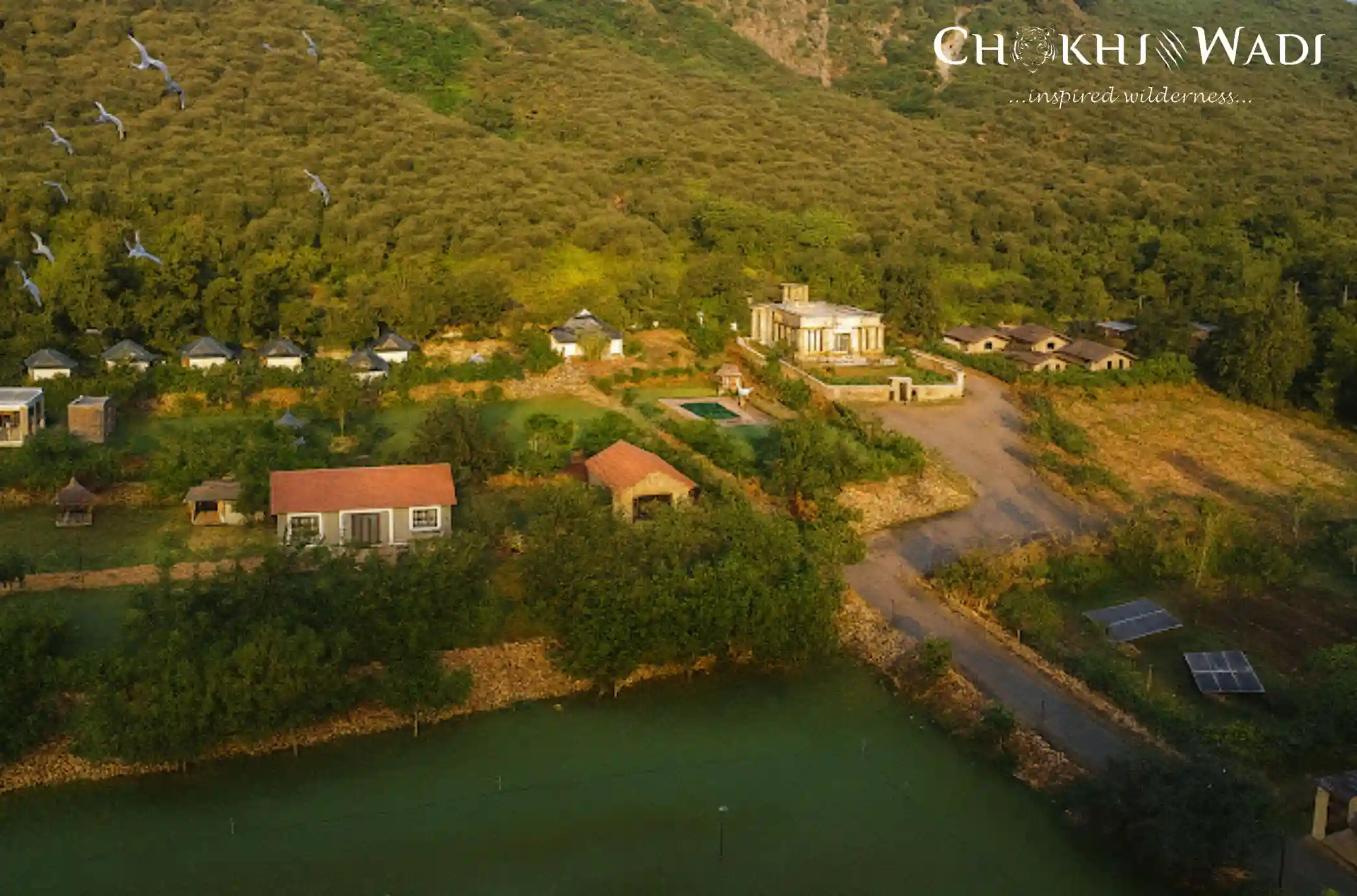
Chokhiwadi Forest Retreat, an eco-luxury resort in the Aravalli foothills right at the edge of Sariska National Park, is one option worth considering. Built around organic farms, native tree cover, and a genuinely quiet, nature-first setting, it also helps guests with safari bookings, local treks, and excursions to nearby sites like Alwar and Bhangarh Fort. For a trip built around Kankwari Fort and the wider Sariska Tiger Reserve, staying somewhere this closely connected to the forest adds real value beyond just a comfortable room.
Frequently Asked Questions About Kankwari Fort
Q. Can I visit Kankwari Fort without booking a safari?
Ans. No. The fort lies deep inside Sariska Tiger Reserve, and the only way to reach it is through an official safari booking.
Q. How far is Kankwari Fort from the Sariska gate?
Ans. It lies about 21 kilometres inside the reserve from the main entrance, reachable only by safari vehicle.
Q. What is the best time to visit Kankwari Fort?
Ans. October to June, when the reserve is open for safaris. Winter offers cooler, more comfortable conditions, while summer often brings better wildlife sightings near water sources.
Q. Is Sariska Tiger Reserve closed on any particular day?
Ans. Yes, Wednesdays are a weekly holiday for safaris at Sariska, as part of a wider tiger rest-day rule across Rajasthan’s reserves, so plan your visit around this.