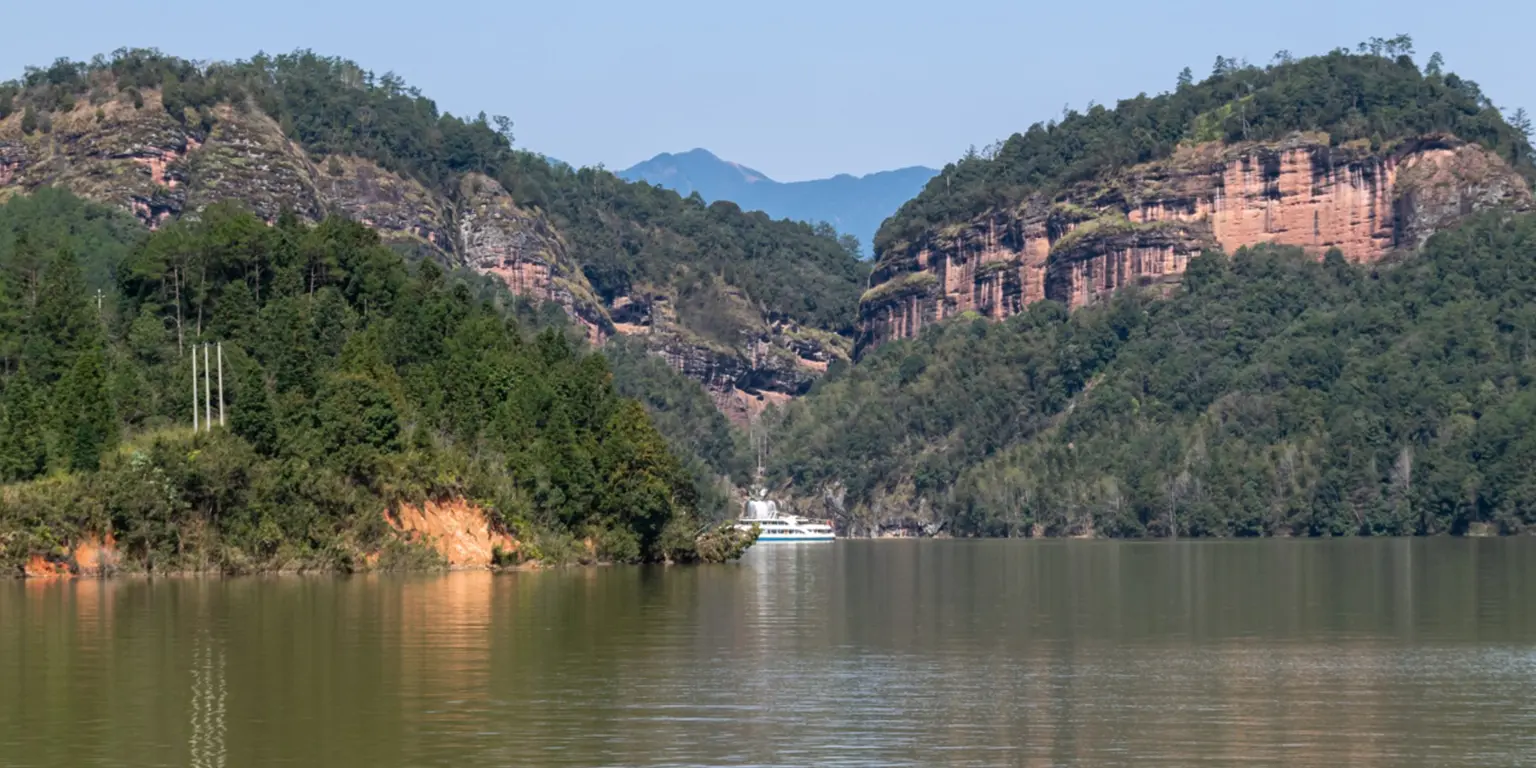
The Aravalli Range does not whisper; it grinds. These are some of the oldest fold mountains on the planet, a jagged spine of quartzite and grit that predates the Himalayas by hundreds of millions of years. Deep within this scorched, lunar landscape sits Sariska. Most travelers arrive with a single-minded obsession: the flash of orange and black through the dhok trees. But to look only for the tiger is to miss the ghost cities, the 6th-century ruins, and the emerald lakes that have sustained empires.
Beyond the safari gates, the land reveals a more complex story of survival and structural decay. If you are navigating the rugged terrain of Alwar, these are the 10 definitive places to visit near Sariska and places to stay in Sariska that demand your presence.
1. The Ghost City of Bhangarh
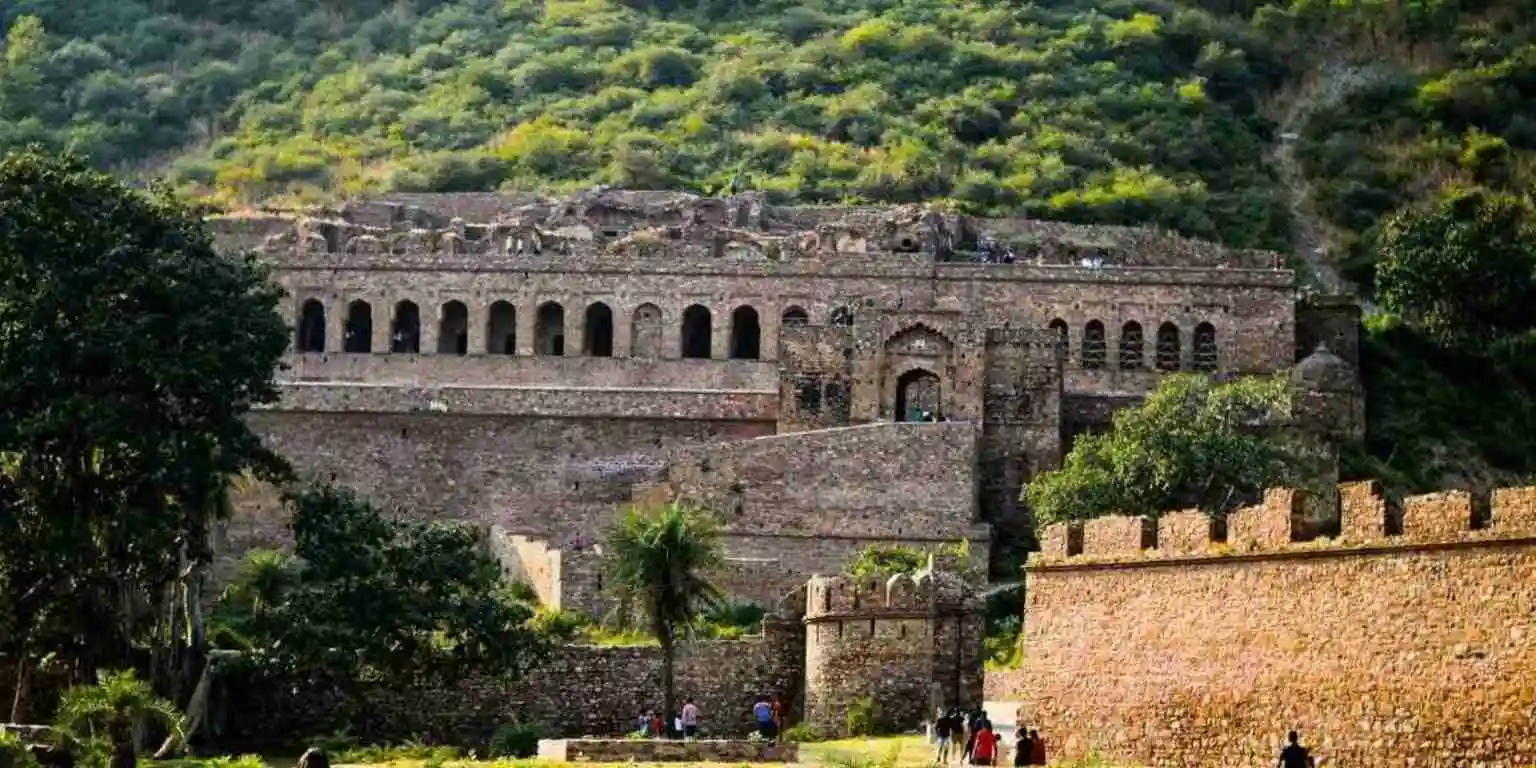
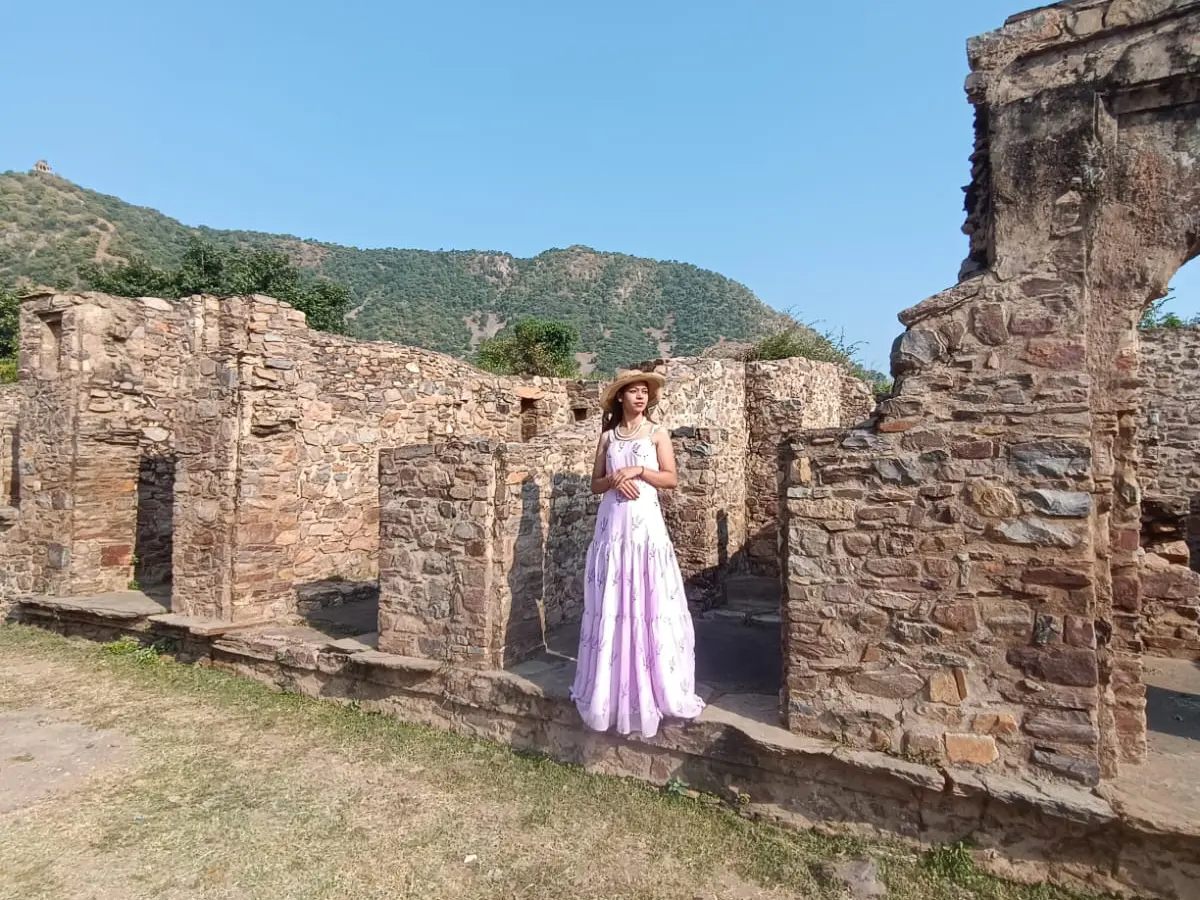
Located roughly 50 kilometers from the sanctuary, Bhangarh Fort is not merely a “haunted” site; it is a masterclass in 17th-century urban planning frozen in mid-collapse. Built by Raja Madho Singh, the site remains under the strict jurisdiction of the Archaeological Survey of India, which forbids entry between sunset and sunrise.
The air here feels heavy, hemmed in by the surrounding hills. Walk past the Jauhari Bazar—a skeletal marketplace of roofless stone shops—and you’ll find the Gopinath Temple, standing on a 14-foot plinth with carvings so precise they seem at odds with the surrounding desolation. Is it cursed? The locals think so. For the objective observer, it is a hauntingly beautiful carcass of a civilization.
2. The Neelkanth Mahadev Complex
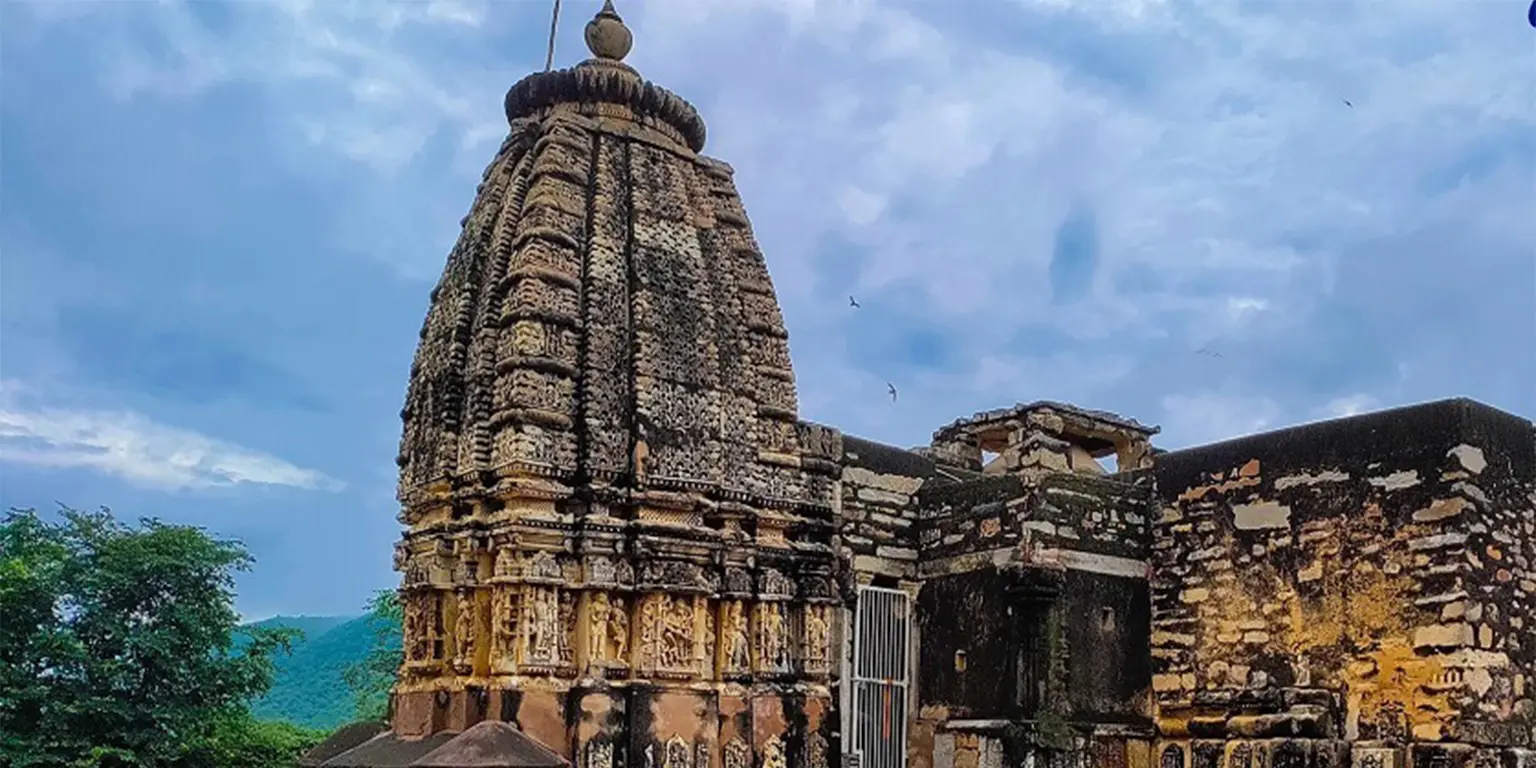
Deep in the isolated core of the Aravallis lies a site that defies the erosion of time. The Neelkanth Mahadev Temple, dating back to the 6th and 10th centuries, was once a sprawling metropolis of over 300 temples. Today, only one main shrine remains intact, dedicated to the “blue-throated” Shiva.
The architecture is a violent explosion of detail. The stone walls are encrusted with erotic sculptures and celestial figures, reminiscent of Khajuraho. Reaching it requires a brutal drive through rocky forest paths, making it one of the most rewarding places to visit in Sariska for those who prefer silence over souvenir shops.
3. Siliserh Lake: The Royal Lifeline
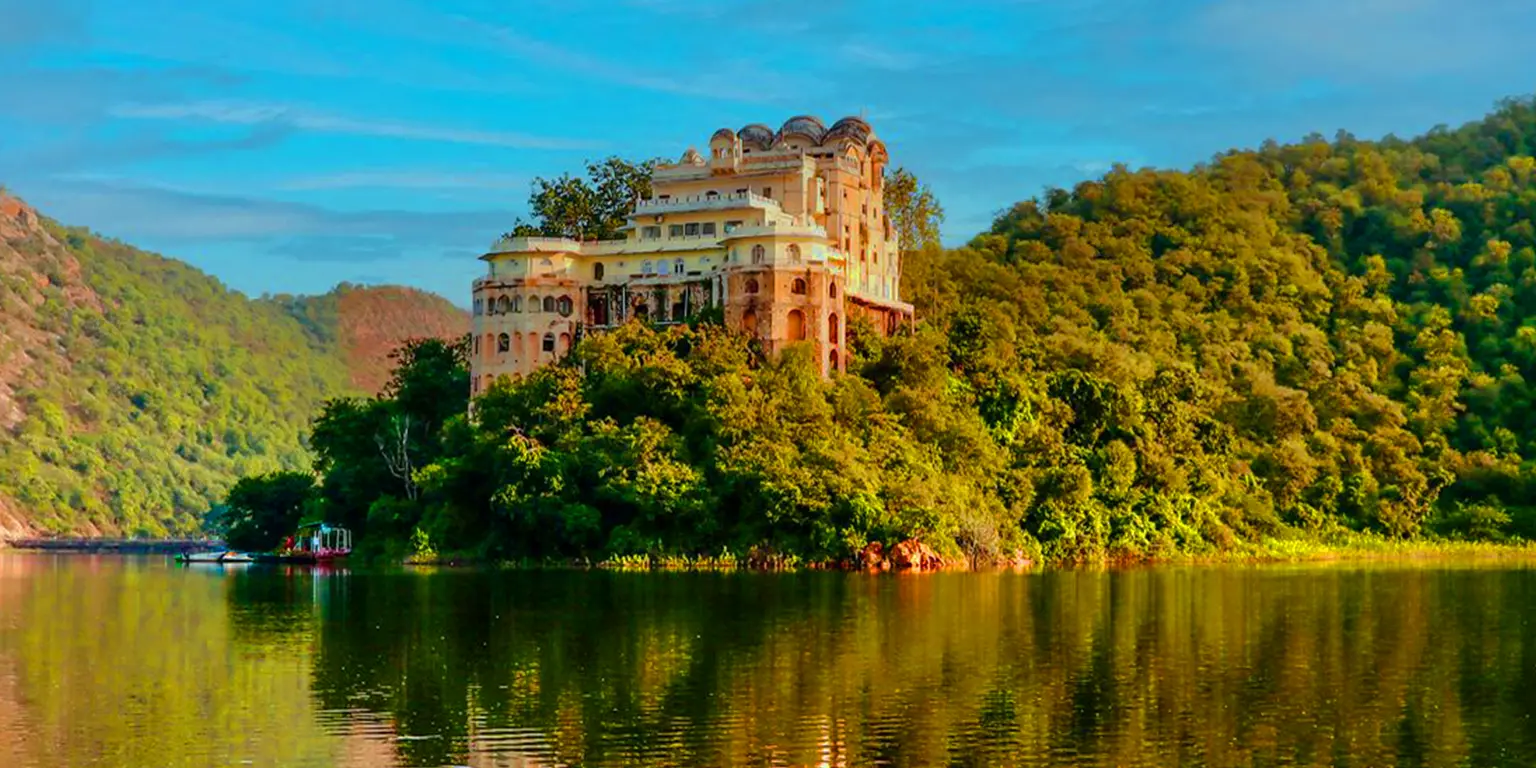
In 1845, Maharaja Vinay Singh decided to dam a tributary of the Ruparel River to quench Alwar’s thirst. The result was Siliserh Lake, a 7-square-kilometer mirror of water framed by the stark, ochre hills.
Perched on the lip of the lake is the Siliserh Palace, originally a hunting lodge and now a heritage hotel. The contrast is startling: the dry, deciduous scrub of the park gives way to a lush, aquatic oasis home to a significant population of crocodiles. A boat ride here offers a rare perspective of the Aravallis—not from the dust of a jeep, but from the stillness of the water.
4. Kankwari Fort: A Royal Prison
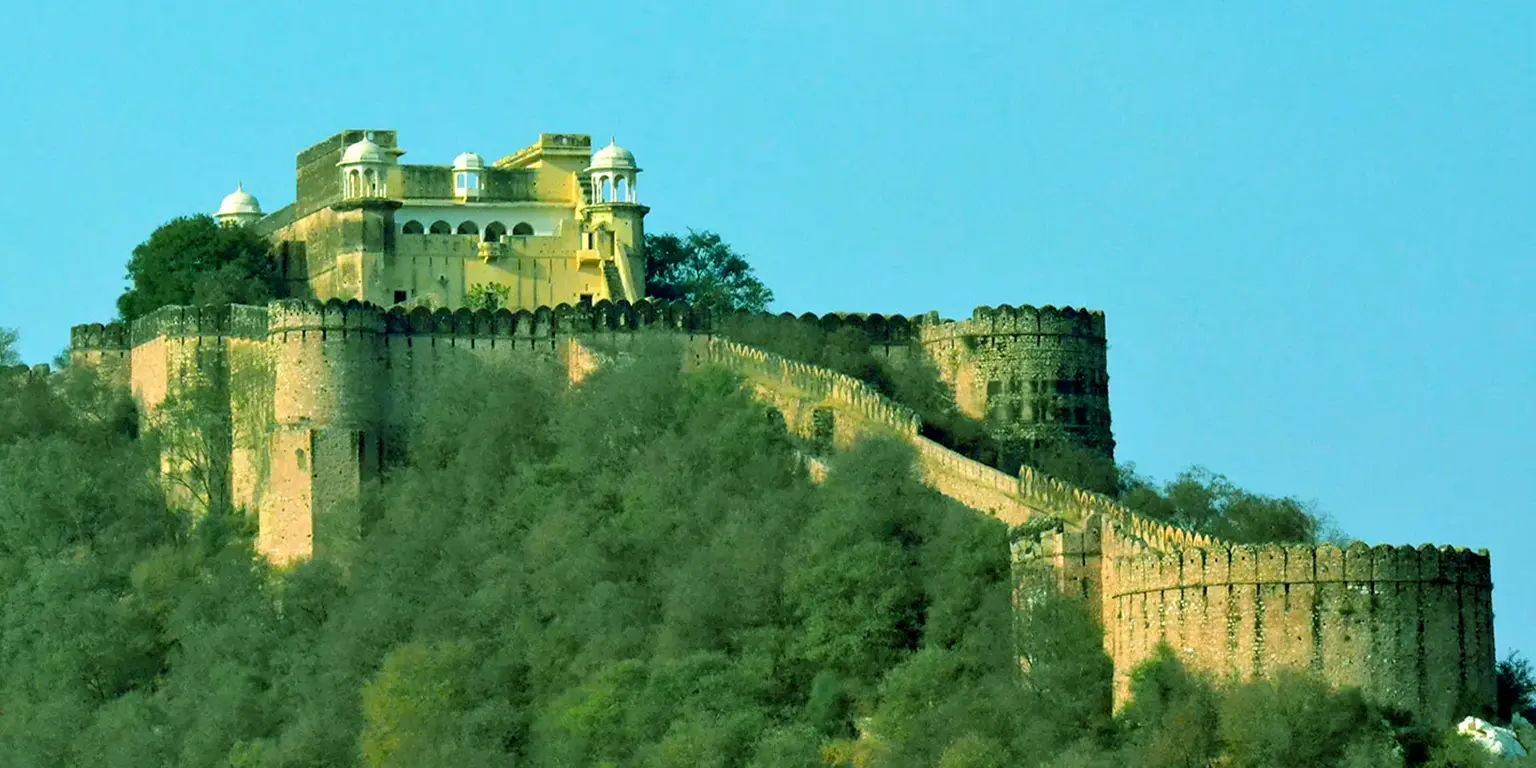
High on a hill in the heart of the Tiger Reserve stands Kankwari. Its history is grim. This was the gilded cage where the Mughal Emperor Aurangzeb imprisoned his brother, Dara Shikoh, during the bloody war of succession.
The fort is now a ruin, but its strategic value remains obvious. From its ramparts, you can track the movement of herbivores in the valley below for miles. It serves as a stark reminder that even in the wild, the machinations of man have always left their mark.
5. Pandupol: The Gateway of Myth
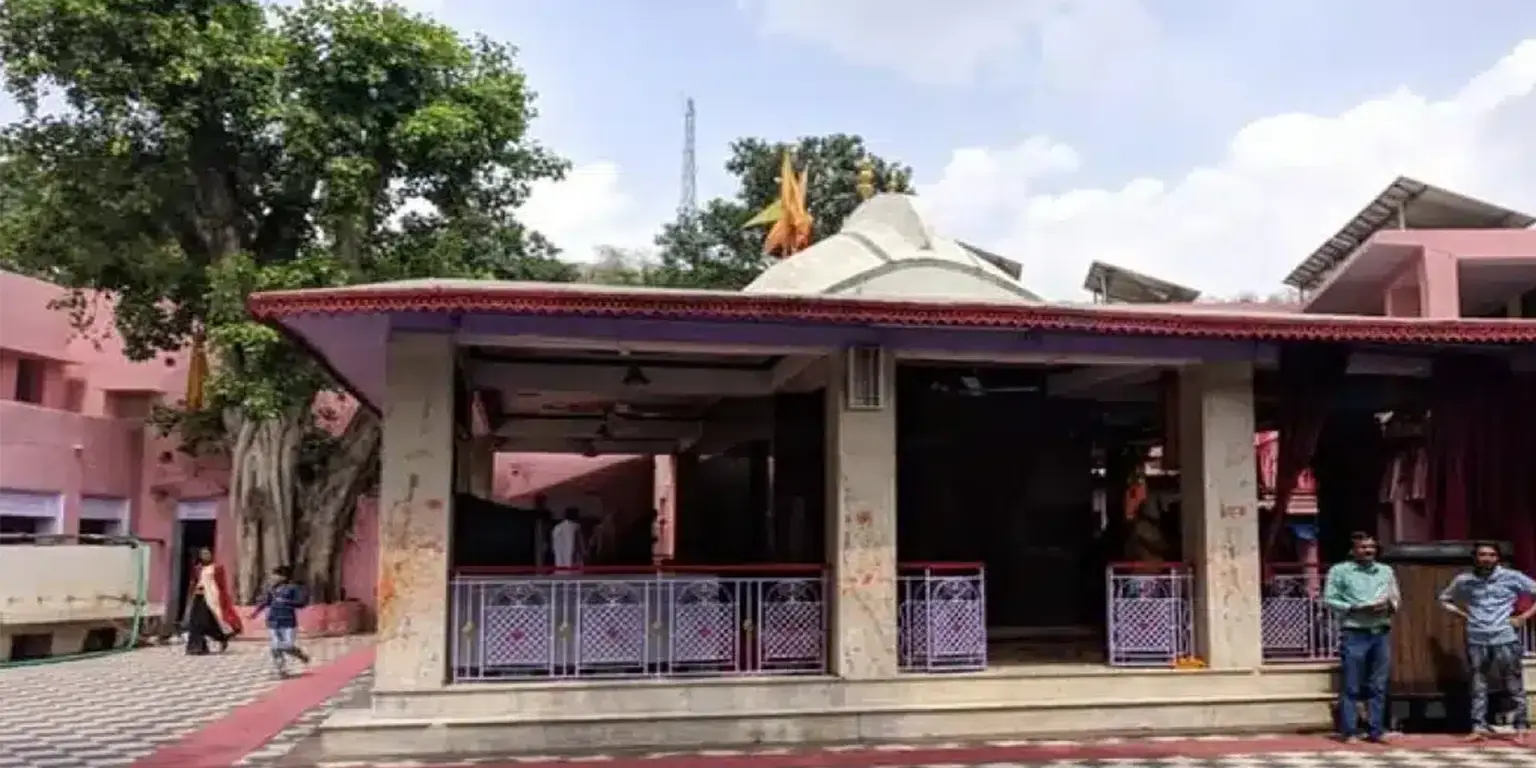
Legend suggests that Bhima, the strongest of the Pandava brothers, struck a rock face with his mace to create a passage during their exile. This is Pandupol. A natural rock bridge stands over a cascading spring, hidden within the dense foliage of the reserve.
On Tuesdays and Saturdays, the forest’s silence is broken by the hum of pilgrims heading to the Hanuman temple here. It is a rare moment where the wild and the divine intersect, though the real attraction is the sheer geological defiance of the rock arch itself.
6. The Citadel of Bala Qila
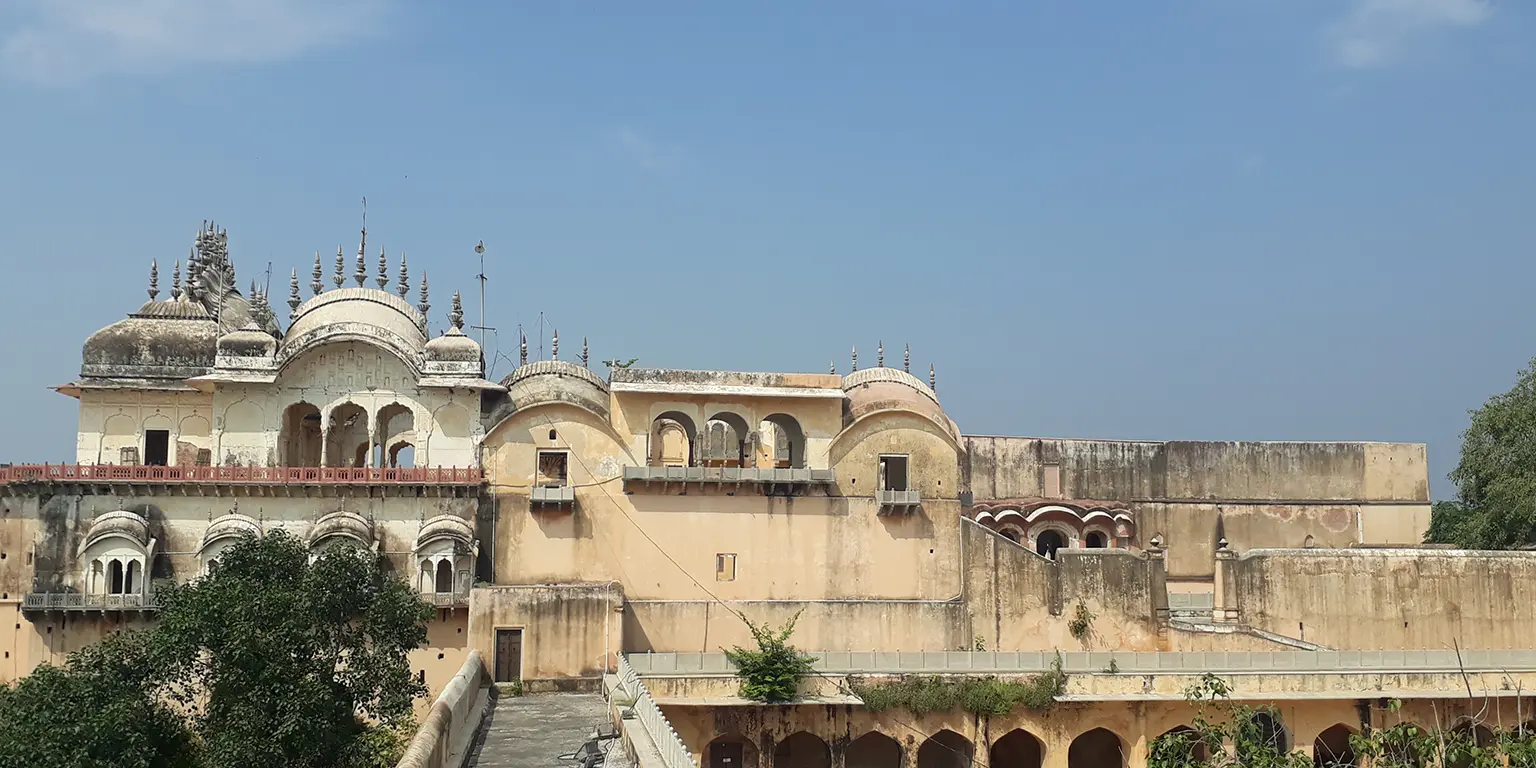
Towering above Alwar city, the “Young Fort” or Bala Qila sits on 10th-century foundations. Its massive fortifications stretch across 5 kilometers of the ridgeline, featuring six magnificent gates like Jai Pol and Suraj Pol.
The fort contains marble columns and latticed balconies that reflect a sophisticated blend of Rajput and Islamic styles. While parts of the interior are now restricted, the view from the top provides a panoramic census of the Alwar landscape, stretching from the urban sprawl to the dark edges of the tiger reserve.
7. Moosi Maharani Ki Chhatri
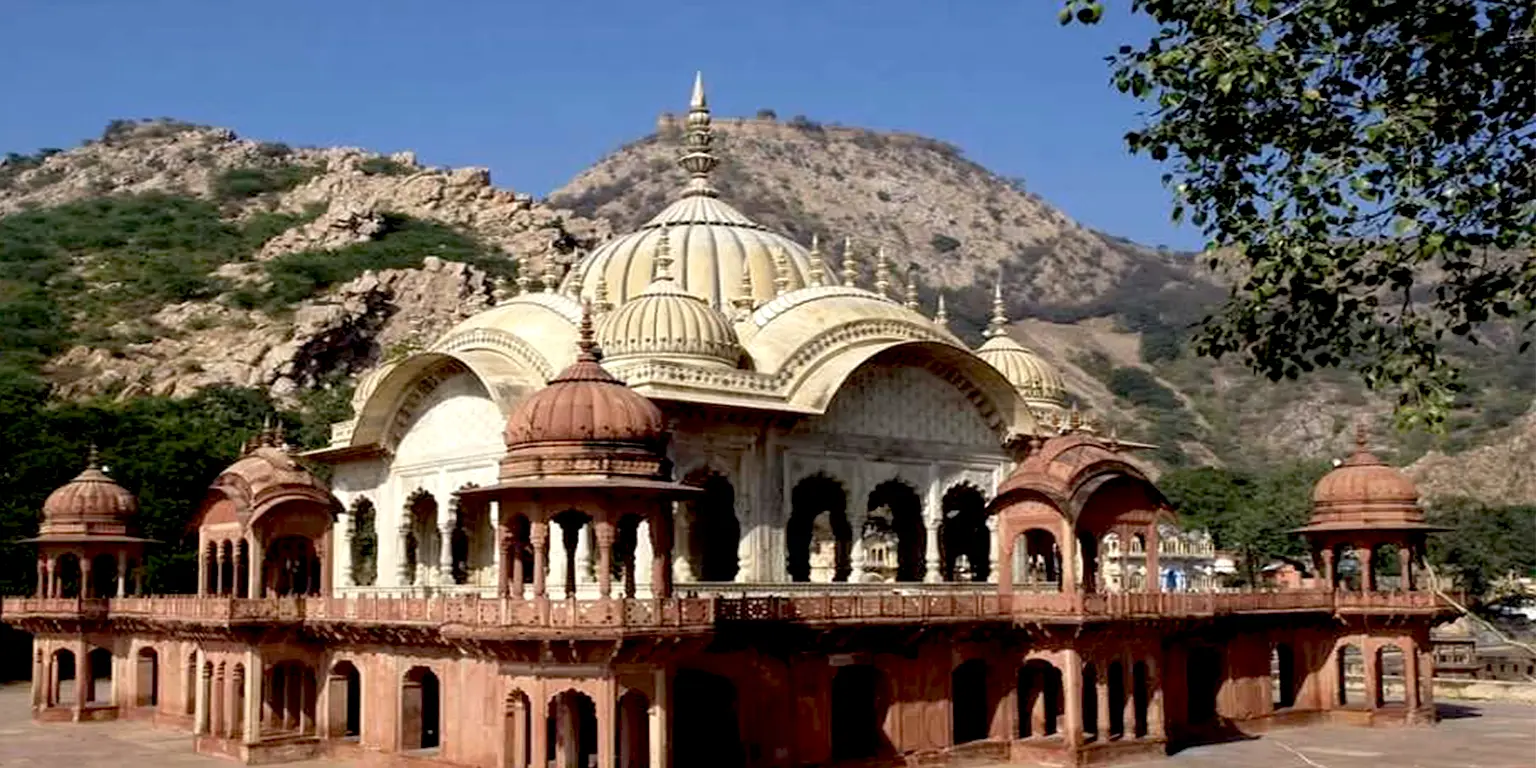
Just outside the Alwar City Palace lies a cenotaph that serves as a visual poem in red sandstone and white marble. Built in memory of Maharaja Bakhtawar Singh and his queen, Rani Moosi, the structure features two distinct levels. The ground floor’s sandstone pillars support a marble upper story crowned by domed arches.
The ceiling is an intricate gallery of gold-leaf paintings depicting mythological scenes. It sits beside the Sagar, an artificial tank whose symmetrical stairs create a rhythmic reflection in the water—a photographer’s sanctuary during the golden hour.
8. Abhaneri: The Inverted Pyramid
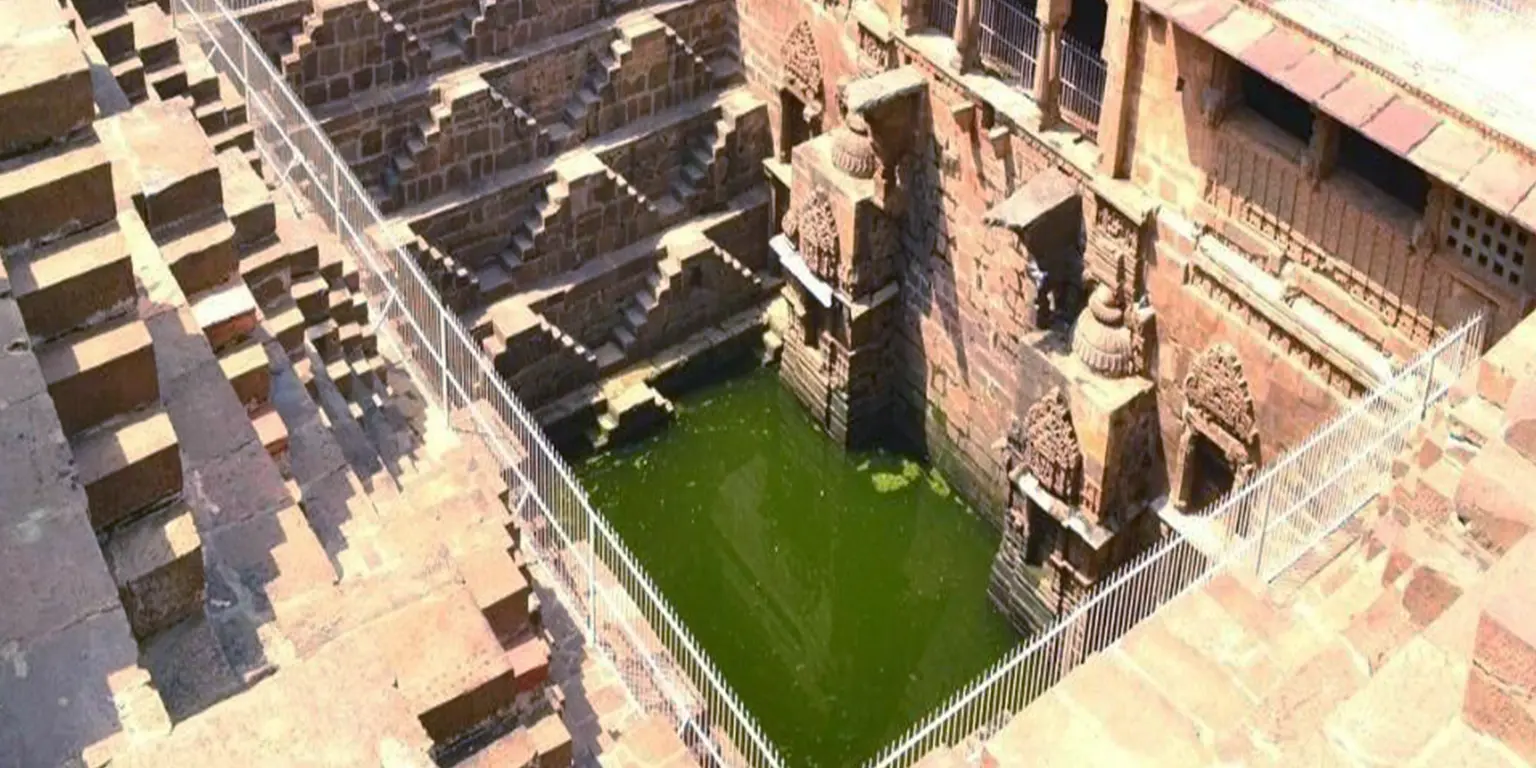
A slight detour from the Sariska circuit leads to Chand Baori in Abhaneri. This is one of the world’s largest and deepest stepwells, descending 13 stories into the earth with 3,500 narrow steps.
Built in the 8th century to conserve water in the arid desert, the geometry of the well is mesmerizing. It is a testament to ancient Indian engineering—a cooling, subterranean community space designed to defy the Rajasthani sun.
9. Garbhaji Waterfall
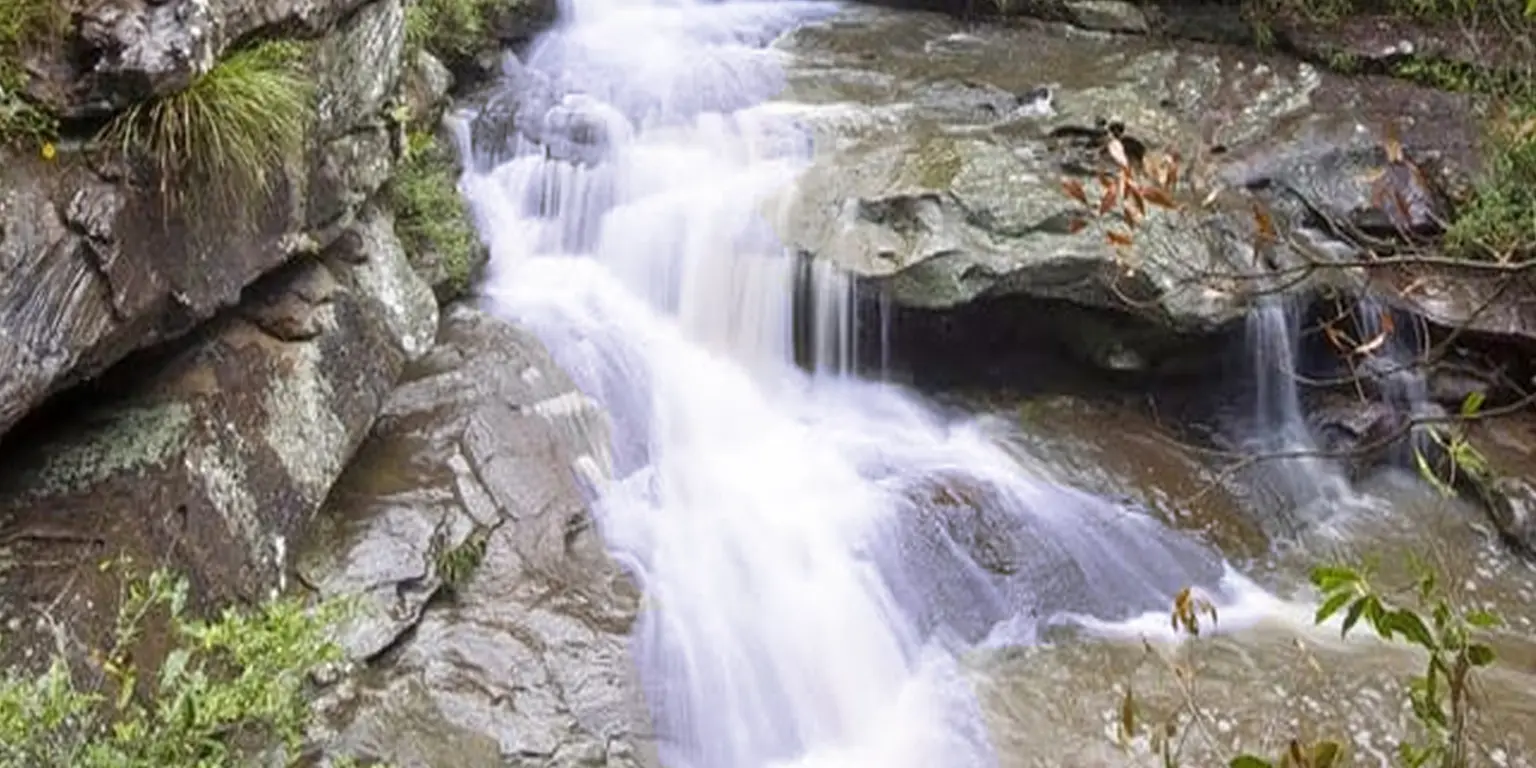
Waterfalls in a semi-arid desert are an anomaly. Garbhaji is located near the Alwar-Sariska road, where water cascades over jagged rocks into a deep gorge. The trek to the falls is steep and unpolished, attracting those looking for a physical challenge. It is best visited immediately after the monsoon when the Aravallis are briefly, violently green.
10. The Sanctuary of Bhartrihari Nath
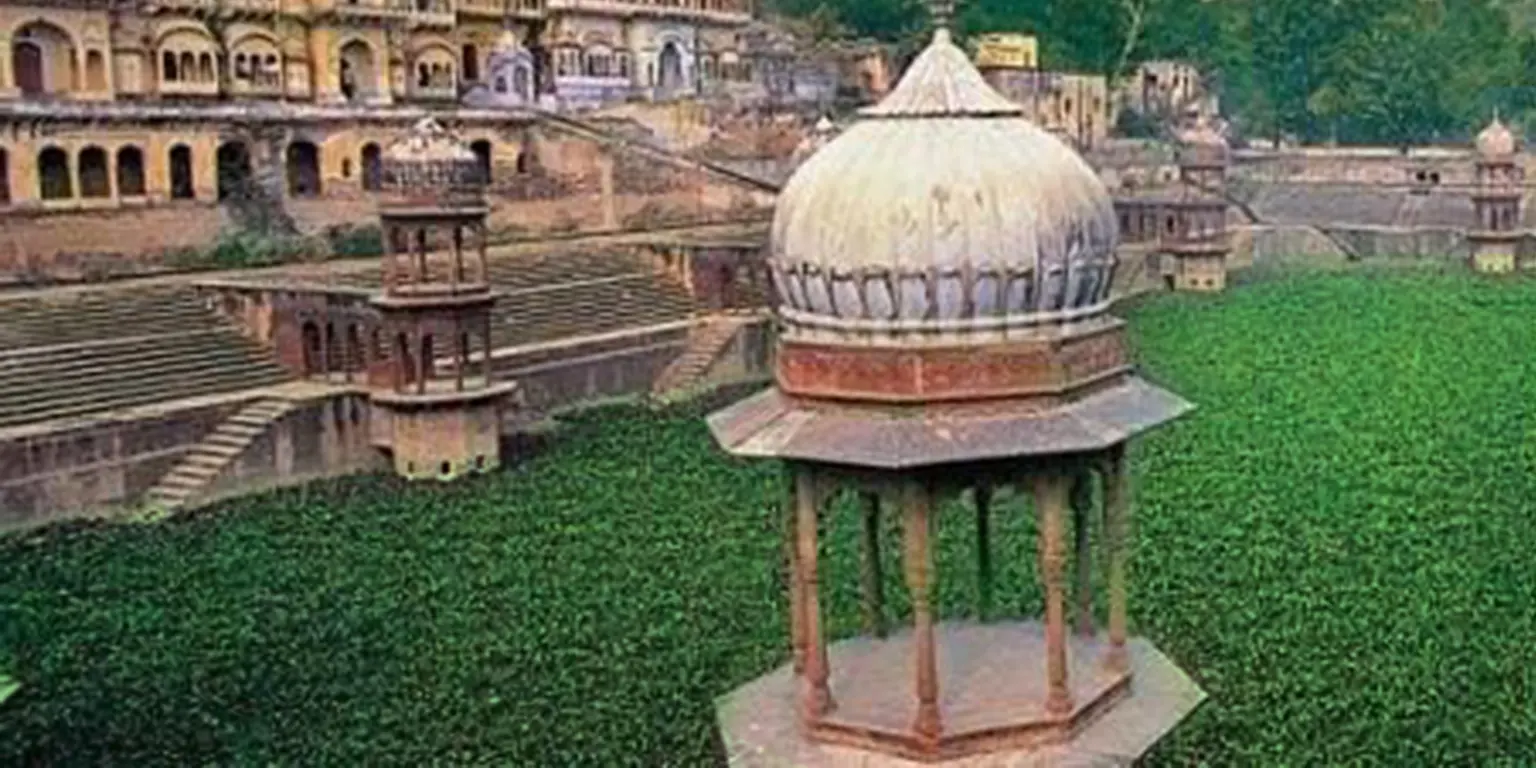
Tucked against the park’s edge, this temple honors a king who traded his crown for the life of a mystic. Bhartrihari is more than a landmark; it’s a living pulse of local faith. Legend says a sacred fire here has burned without interruption for centuries. Between the heavy scent of dhoop and the rhythmic clang of brass bells, the temple offers a grounding, human counterpoint to the raw indifference of the surrounding bush.
Where to Stay: Where the Wild Regains Its Ground
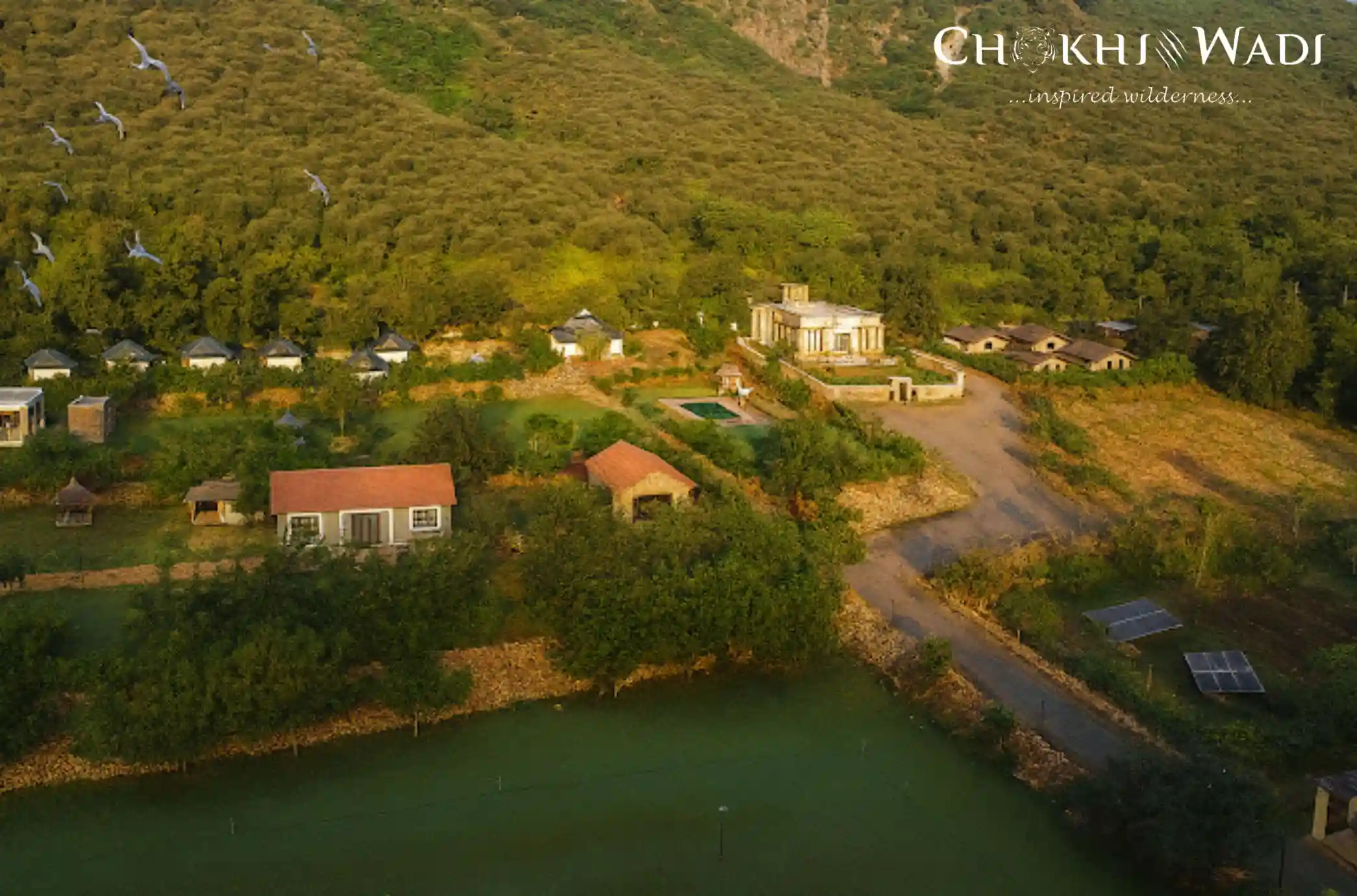
Finding a place to stay usually means choosing between comfort and the environment. However, when surveying the best resorts in Sariska, Chokhiwadi Forest Resort stands out as a gritty, successful experiment in rewilding. This wasn’t always a lush canopy; not long ago, this was 20,000 trees worth of barren, rocky soil. Today, that man-made forest has matured into a private micro-climate that pulls in everything from rare birds to the quietest nocturnal wanderers.
The stay is built around genuine immersion. You aren’t just looking at the woods; you’re looking through them—literally—with an 8-inch Dobsonian telescope that turns the Rajasthani sky into a deep-space map. Even the food tells a story of the land, moving from the organic garden directly to the plate with a menu that bridges the gap between bold Rajasthani spices and the delicate nuances of Bengali tradition. It’s a space designed for travelers who realize the forest isn’t a wallpaper—it’s the main character.
The Aravallis don’t reward the hurried. Whether you’re standing in the heavy silence of the Bhangarh ruins or tracking a predator’s print through the dhok trees, Sariska forces a change in pace. The tiger might be the face of the park, but the real soul of the place is etched into these ancient stones and the people who guard them.