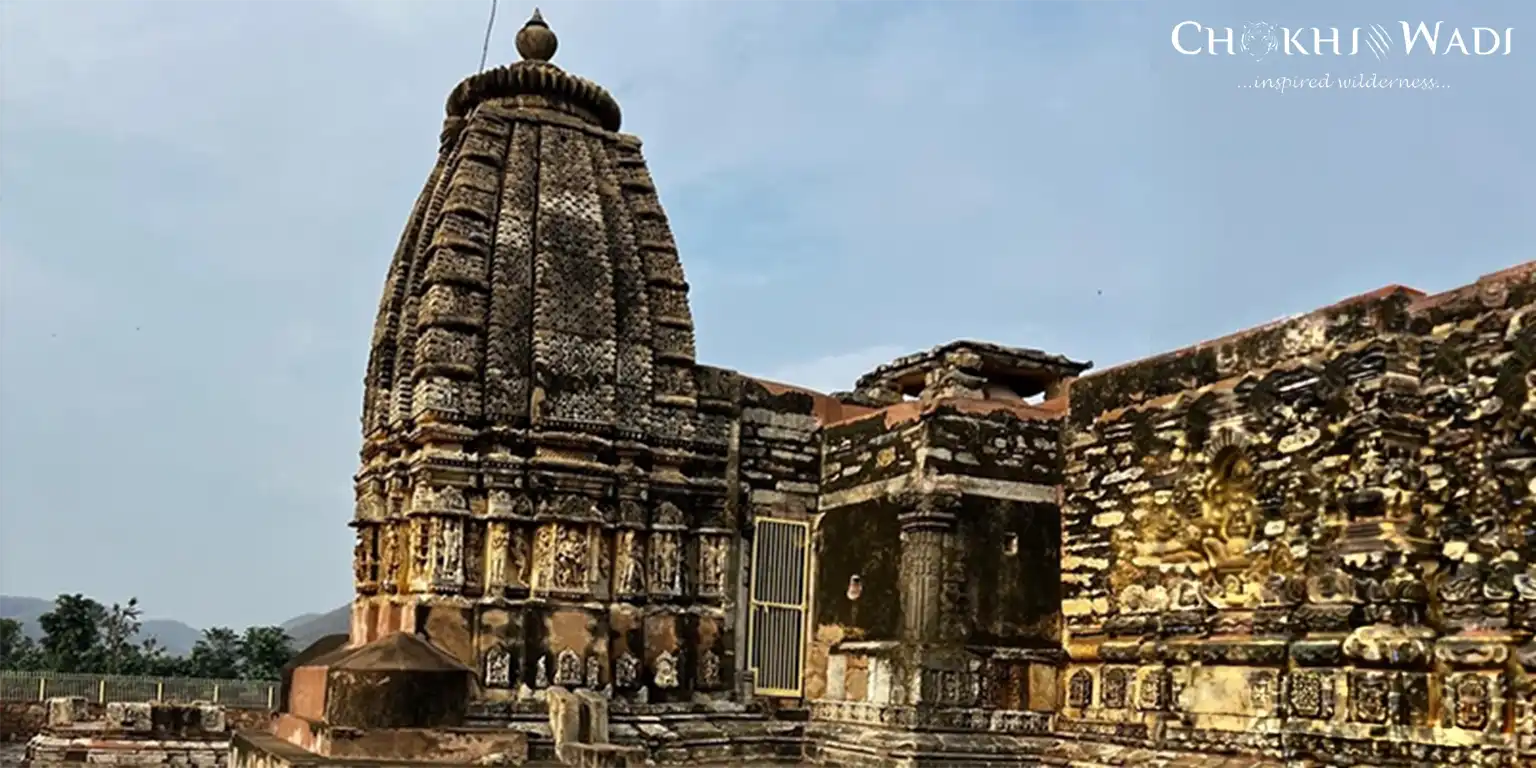
Neelkanth Temple is a 10th-century Shiva temple located inside the buffer zone of Sariska Tiger Reserve, in Tehla village, Alwar district, Rajasthan. It is the sole survivor of an ancient temple complex that once had approximately 200 temples, most of which were destroyed during Aurangzeb’s Mughal campaign. Built by Maharajadhiraj Mathanadeva of the Gurjar Pratihar dynasty, with an inscription dated 961 CE, the temple is known for its intact original shikhara and detailed sculptures, earning it the nickname “Khajuraho of Sariska.” This guide covers Neelkanth Temple Sariska’s history, visiting timings, places to stay in Sariska, and the route to reach it.
Neelkanth Temple Sariska History
The site occupies an elevated plateau in Tehla village, Rajgarh tehsil, within the buffer zone of the Sariska Tiger Reserve in Alwar district, Rajasthan. In ancient times, this place was known as Rajyapura. In the medieval period, it was called Paranagar. Today it is known simply as Neelkanth.
The inscription that dates the temple is from 961 CE, carved into stone within the Tiger Reserve. It confirms the builder: Maharajadhiraj Parmeshwara Mathanadeva (also referred to as Mathanadeva Bargujar), a feudatory ruler of the Gurjar Pratihar Empire. Construction began between the 6th and 9th centuries, with the complex growing across several generations of Pratihar rule.
Had it survived intact, scholars believe it would have been one of the largest combined Shiva and Jain temple complexes in India — surpassing in scale what most visitors associate with Khajuraho. It did not survive intact. That is the most important historical fact to carry with you when you visit.
The Lost Temple City — What Sariska Used to Contain
When you stand at Neelkanth today, you are standing in what was once a bustling temple city. Archaeological surveys show individual monuments spanning more than five metres each, most on high raised platforms. Square shaft pillars with ghatapallava (vase and foliage) motifs were a recurring structural feature. The temples covered both Hindu (Shaiva) and Jain traditions.
According to the official Incredible India portal, the ruins around the surviving Neelkanth Mahadev Temple are the remnants of approximately 200 temples — all attributed to destruction by Aurangzeb’s army during the Mughal period. The surviving temple is the last one standing.
The Bee Legend — Why One Temple Survived
When Aurangzeb’s army arrived to destroy this complex, local legend holds that swarms of enraged bees swarmed from this one temple and drove the army back. The temple survived. Whether you accept the legend literally or not, the fact remains: this single temple stands intact, its shikhara still at its original height, while two hundred others lie in ruin. The story gives the surviving structure an emotional weight that you feel the moment you walk onto the plateau.
Architecture — What You Will See
The surviving Neelkanth Mahadev Temple is an outstanding example of Pratihara-period temple architecture. Here is what distinguishes it from a generic “old carved temple”:
The Rangamandapa: A pillared pavilion standing on four pillars was originally flanked by three Pancharathas — projecting sections each housing a different deity. Two of the three Pancharathas have been destroyed. The central one remains, and it houses the Shiva linga that is the primary object of worship.
The Jangha (wall) sculptures: The exterior wall of the surviving temple is carved with specific, named iconography:
- Narasimha (the man-lion avatar of Vishnu) on the north face
- Harihararka on the east face
- Tripurantaka (Shiva destroying the three cities of the demons) on the south face
The projecting sections feature surasundaris (celestial beautiful women) and dikpalas (guardian deities of the eight directions). These sculptures are what earned the site the nickname “Khajuraho of Sariska” — their quality and sensual detail is comparable to the more famous UNESCO-listed complex. The comparison is apt and deserved.
The Shikhara: Most remarkably, the tower of the surviving temple retains its original altitude — it has not been shortened, repaired, or reconstructed. What you see is the original 6th-to-9th-century structure, still standing.
Mythological Significance
The name Neelkanth comes from Sanskrit: Neel (blue) + Kantha (throat). Lord Shiva is called Neelkanth because he consumed the poison Halahala — the deadly venom that emerged during the churning of the cosmic ocean (Samudra Manthan) — to save the universe. His throat turned permanently blue. The temple is dedicated to this form of Shiva, making it both an archaeological site and a living place of pilgrimage.
What Else Is on the Place
Naugaja Jain Temple (Temple of Santinatha): A Jain shrine also surviving from the medieval period, on the same plateau, representing the Jain tradition that once coexisted with the Shaiva tradition here.
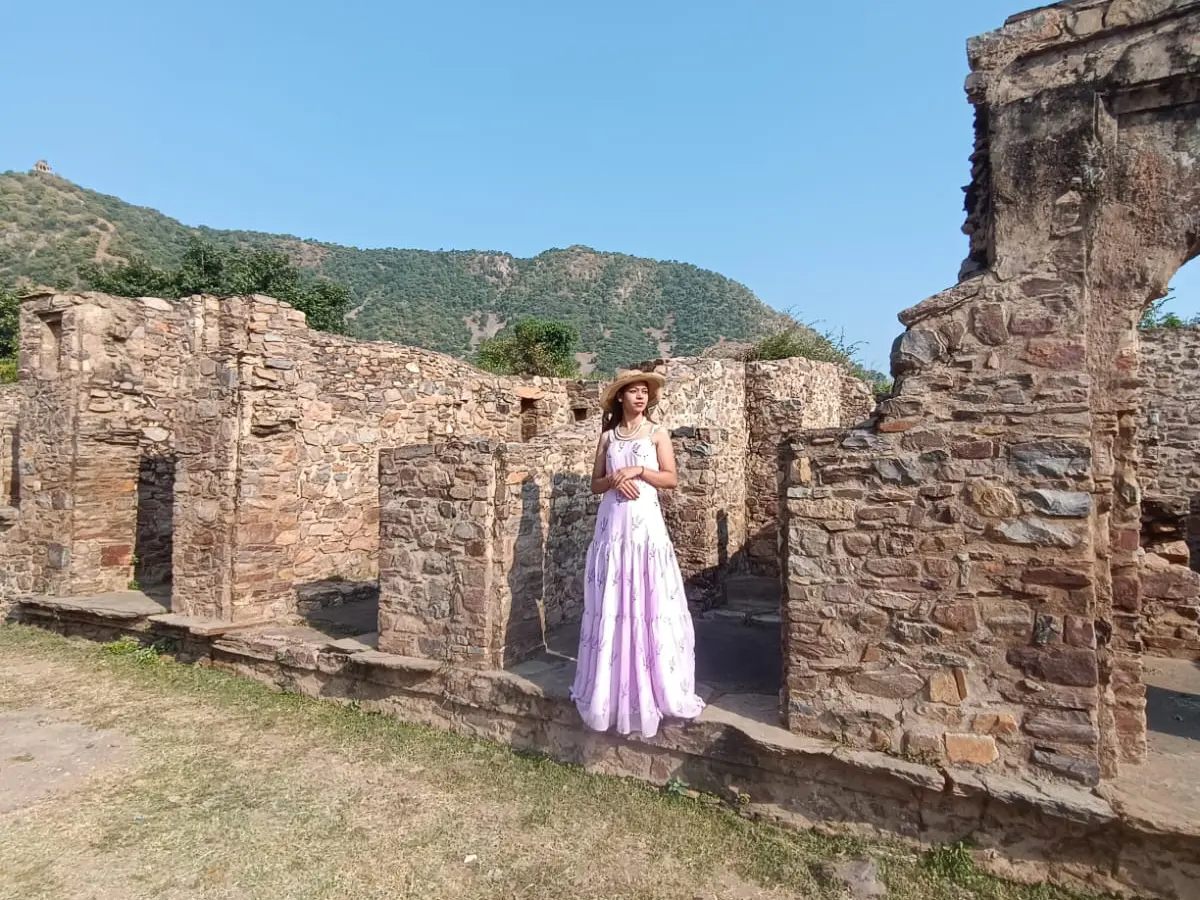
Rajogarh Fort ruins: The dilapidated walls of the old Rajogarh Fort surround the plateau and define the approach.
Lachoro Tank: A water body within the complex near which several additional temple remains are located.
Neelkanth Temple Sariska Timings
The Neelkanth Temple is open to visitors daily from sunrise to sunset. There are no fixed ticketed visiting hours, as this is an active pilgrimage site rather than a government-managed ticketed monument. The complex receives general visitors and pilgrims throughout the day.
Entry fee: No entry fee for the temple itself. However, since the temple is within the Sariska Tiger Reserve buffer zone, you may be required to pay the applicable forest area entry fee depending on the access route you use.
Best time of day: Early morning gives you cooler temperatures, better photography light, and fewer visitors. The plateau receives direct sun on exposed sections, making mid-afternoon visits uncomfortable.
Festival timing: Maha Shivaratri sees the largest gathering of pilgrims at Neelkanth. If you want the experience of the festival, plan ahead — the roads get busy. If you want the site to yourself, avoid it.
Route to Neelkanth Temple Sariska
This section is the most practically important and least adequately covered by existing travel content.
Starting from Alwar: Approximately 72 kilometres. Follow the Alwar–Tehla route through Rajgarh tehsil.
Starting from Sariska Gate: The more common starting point for tourists. From Sariska Gate, follow the forest road towards Tehla — approximately 25 to 30 kilometres. From Tehla, the road climbs to the plateau. Total drive is approximately 1 to 1.5 hours.
Starting from Jaipur: Approximately 110 kilometres. Take NH 48 towards Alwar, exit towards Rajgarh, proceed to Tehla.
The final approach: The last 2 kilometres are unpaved — rough, with potholes and rubble on the uphill stretch. An SUV or sturdy bike is mandatory. A standard sedan risks damage and you risk getting stranded. This is not a warning to be taken lightly.
Monsoon warning: Avoid during active monsoon (July–August). The road can become impassable. Visit a few days after rain once the surface has dried.
Practical Tips Before You Go
- Carry your own water and food — no facilities on the plateau
- Start early — arrive by 8 AM for better light, lower temperature, and fewer visitors
- Wear comfortable shoes — walking across uneven stone and rubble
- Leave before sunset — the jungle road is difficult in the dark
- Download offline maps before leaving — phone signal can be absent inside the forest area
Stay at Chokhiwadi — Your Base for Sariska
Neelkanth Temple, Bhangarh Fort, Pandupol, and the Sariska Tiger Reserve safari are all best experienced from a base that is close, well-informed, and genuinely connected to the landscape.
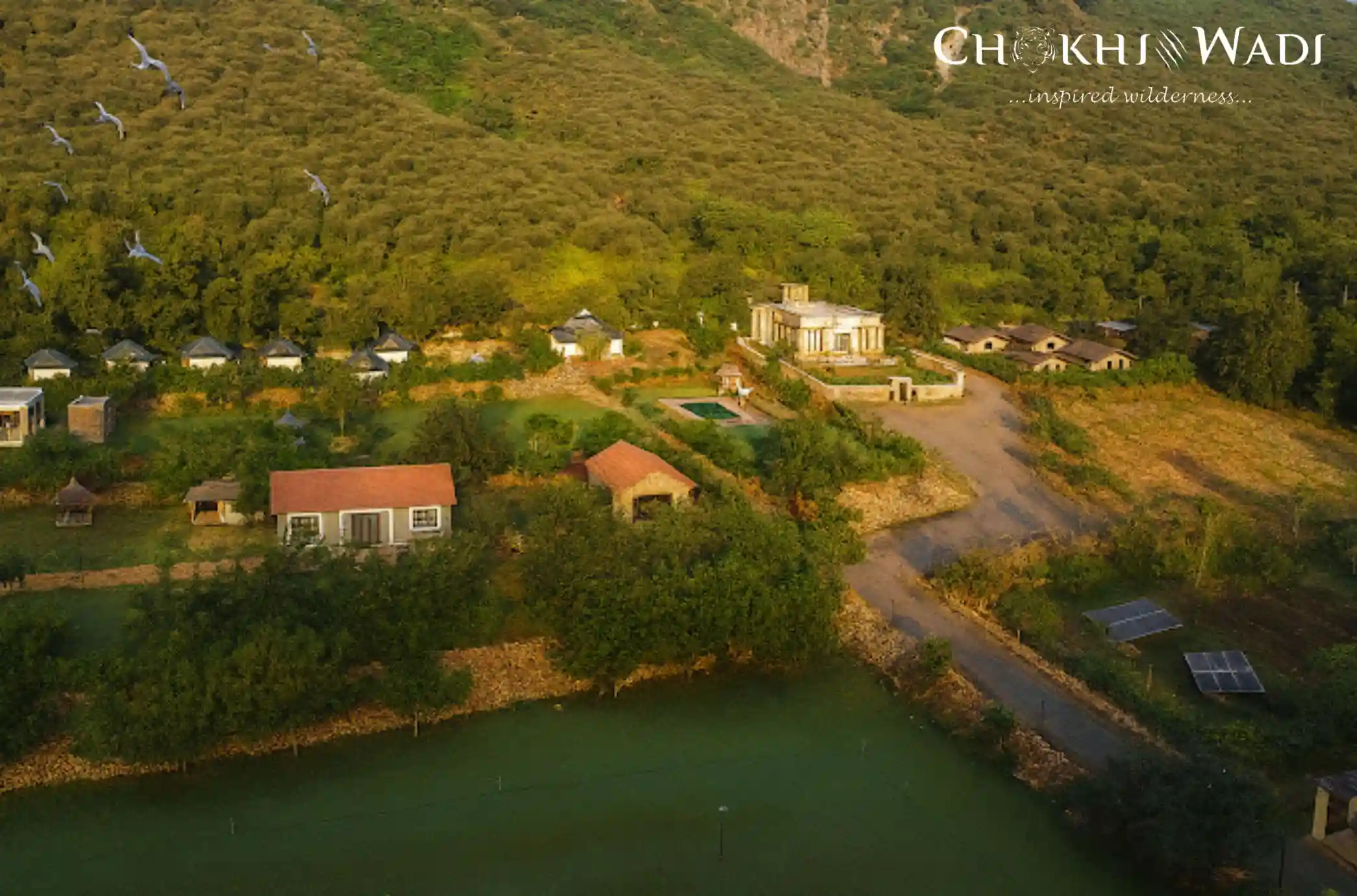
Chokhiwadi Forest Retreat in Ajabgarh, Thanagazi, is the best Resort in Sariska. Built on 9.5 acres of the Aravalli foothills, the property offers eco-luxury accommodation across glamping tents, mud villas, and stone cottages. The team knows the routes, road conditions, and access timings for every site around Sariska — including Neelkanth. They can help you plan a day that combines a morning at the temple, a Sariska Tehla Gate safari slot, and an evening at the property with a farm-to-table Rajasthani dinner. That kind of trip comes together when you have people who know the roads — and that local knowledge is what Chokhiwadi consistently provides.
FAQs
Do I need a safari permit to visit Neelkanth Temple Sariska?
The temple is in the buffer zone, not the core zone of Sariska Tiger Reserve. It is accessible without a standard safari permit, but a forest area entry fee may apply depending on the access route. Visiting via the Tehla Gate side is the standard approach. Confirm current access requirements locally before visiting, as buffer zone rules can change seasonally.
What is the route to Neelkanth Temple from Sariska’s main gate?
From Sariska Gate, take the forest road towards Tehla — approximately 25 to 30 kilometres. From Tehla village, the road climbs steeply to the plateau. The final 2 kilometres are unpaved and rough. An SUV or sturdy bike is required. Do not attempt this in a standard sedan. Total drive from Sariska Gate is approximately 1 to 1.5 hours depending on road conditions.
Why are there so many ruins around the surviving Neelkanth Temple?
Approximately 200 temples that originally formed this complex were destroyed during Aurangzeb’s Mughal campaign in the region. The surviving Neelkanth Mahadev Temple — the only one still standing — was saved according to local legend when swarms of bees drove back the attacking army. The scale of the original complex, had it survived, would have rivalled Khajuraho in significance.
What is the best time of year to visit Neelkanth Temple Sariska?
October to March is the best window — comfortable temperatures, clear skies, and dry road conditions. November and February are particularly pleasant. Avoid July and August during heavy monsoon — the approach road can become impassable. Maha Shivaratri (typically February or March) is the major annual pilgrimage gathering, bringing large crowds. If you want solitude at the site, visit on a weekday morning between October and January.