From the city of Alwar, you can see it without trying. A long line of fortification runs across the Aravalli ridgeline — towers and battlements rising 300 metres above the streets below. That is Bala Qila, one of the most historical places to visit in Alwar. It has seen Rajputs, Mughals, Marathas, Jats, and Pathans. Babur spent a night inside its walls. Jahangir was exiled here. Maharaja Pratap Singh captured it in 1775 and used it as the foundation for the city that grew beneath it. This guide covers everything — history, architecture, timings, entry fees, how to reach, and what to see inside.
Bala Qila History — Origins and the Name
Bala Qila translates to ‘Young Fort’ (or ‘High Fort’) from Hindustani and Persian roots. It is an ironic name for a structure with 10th-century origins. The government noticeboard at the fort’s gate traces its beginnings to the 10th century, during the reign of Nikumbh Rajput chiefs, when a mud fort occupied this hilltop. Hasan Khan Mewati rebuilt the formal stone structure in the early 16th century over those older foundations — though official tourism noticeboards frequently cite 1550 AD for the major structural expansion visitors see today.
Mewati’s decision to build on this Aravalli hilltop was purely strategic. The elevated position gave defenders a commanding sightline over the surrounding plains and made assault from below extraordinarily difficult.
Who Ruled Bala Qila — A Fort That Changed Hands Repeatedly
Few forts in Rajasthan saw as many different rulers as Bala Qila. After the Mewatis, control passed through Khanzadas, Mughals, Pathans, Jats, Marathas, and Yadavas before the Kachwaha Rajputs took it in 1775. Each transition involved siege, betrayal, or negotiated surrender.
Maharaja Pratap Singh, a Kachwaha Rajput, captured the fort in 1775 AD and used his control of this strategic position to lay the formal foundation of Alwar as a princely state. The city grew downward from the hill on which this fort stands — Bala Qila did not just overlook Alwar, it created it.
The access route used by Pratap Singh — Laxman Pole — remains the only metalled (paved) road between the city and the fort to this day.
The Mughal Stories — Babur, Akbar, and Jahangir
Bala Qila’s connection to Mughal history is not incidental. Two of the most significant figures in the Mughal dynasty passed through this fort.
Babur — founder of the Mughal Empire — spent a night here and took away a sizeable amount of treasure to gift his son Humayun. That brief visit connected Bala Qila to the very founding generation of the empire.
The second story is more dramatic. Prince Salim — later Emperor Jahangir — was exiled by his father Akbar after plotting the death of Abul Fazal, one of Akbar’s most trusted courtiers and the author of Ain-i-Akbari. Salim was banished from the imperial court and spent time at Bala Qila. The section where he resided is still called Salim Mahal. Walking past it today, you are passing the exact place where one of India’s most powerful future emperors sat in forced exile, stripped of court privileges by his own father.
Architecture — The Specific Details That Matter
Bala Qila runs 5 kilometres from north to south and approximately 1.5 kilometres from east to west, with a circumference of around 8 kilometres. It rises 595 metres above sea level and 304 metres above the city below.
The defensive engineering is specific:
- 15 large towers and 51 small towers
- 446 openings specifically designed for musket fire
- 8 enormous citadels encompassing the perimeter
The 446 musket openings deserve attention. This was not a ceremonial structure — it was a serious military fortification, engineered precisely to repel infantry assaults with firearms.
The architectural style is Indo-Islamic — a blend reflecting successive rulers across centuries. Walls carry carved sculptures and inscriptions from different periods, making the fort a layered historical record.
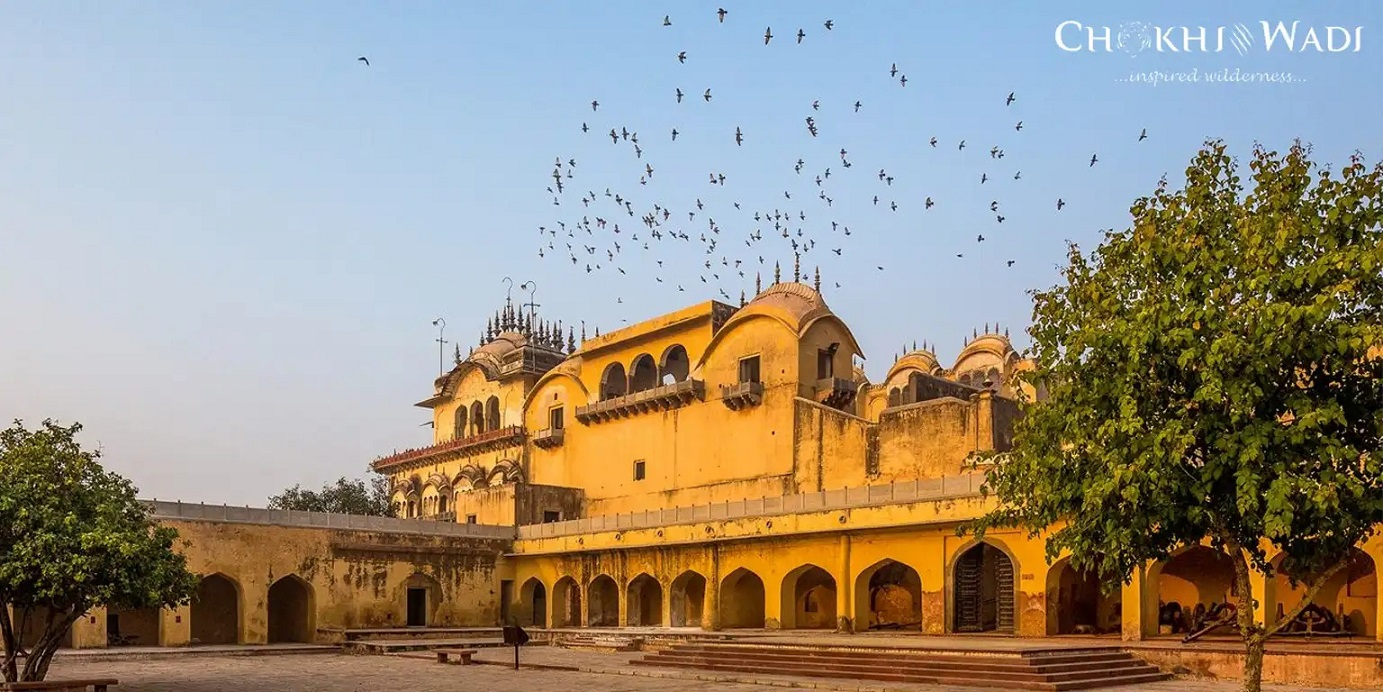
The Nikumbha Mahal Palace inside stands out for its Bengal caned marble pillars supporting large latticed balconies — the most refined palatial architecture within the complex.
What You Will See Inside the Fort
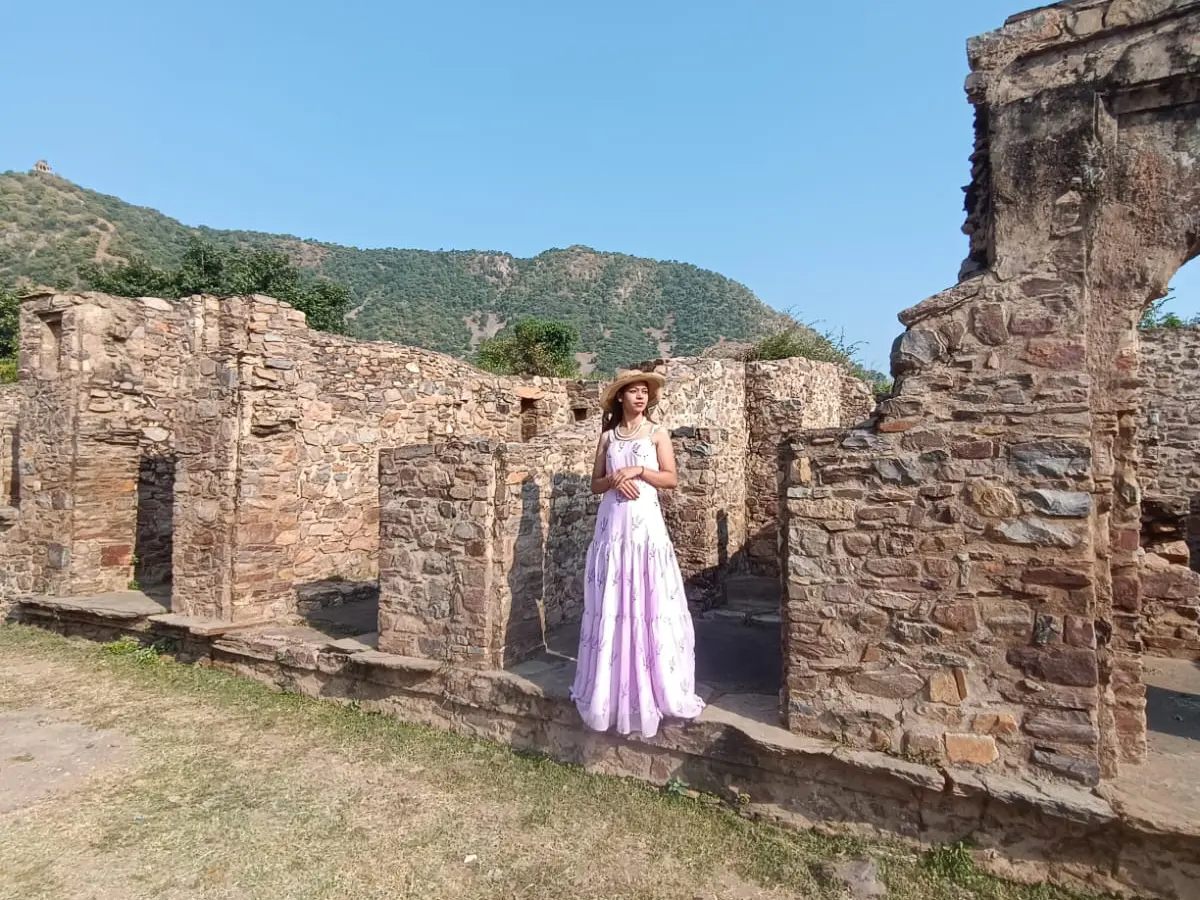
Much of Bala Qila is in a dilapidated state today, but several structures remain visible and worth examining:
Nikumbha Mahal Palace — the most intact palatial structure, with its marble pillars and jali balconies
Salim Mahal — where Prince Salim (Jahangir) was exiled; a place with direct Mughal biographical significance
Suraj Kund — a water tank (kund) inside the fort complex
Salim Sagar Pond — the pond named after Prince Salim, still present within the fort
Jal Mahal — a water palace structure inside the complex
15 temples — including the Chakradhari Hanuman Temple and Sita Ram Temple, which are active places of worship
The fort now also houses a radio transmitter station. This area of the fort requires specific permission from the Superintendent of Police, Alwar, to visit. If accessing the transmitter area is something you want, arrange permission in advance through the SP office before arriving.
Bala Qila Fort Timings
The fort is open daily, seven days a week.
Timings: 10:00 AM to 5:00 PM
Plan to arrive no later than 2:00 PM to give yourself enough time to see the fort properly before it closes. Most visitors spend 2 to 3 hours inside.
Bala Qila Entry Fees
- Indian nationals: ₹15 per person
- Foreign tourists: ₹200 per person
These are among the most affordable entry fees for a fort of this scale and historical significance anywhere in Rajasthan.
Best Time to Visit Bala Qila
October to March is the best window. The weather is cool and manageable, the views from the fort across the Aravalli landscape are clearest, and the climb from the base is not punishing in morning temperatures.
November, December, and January are ideal. Mornings are crisp, afternoon temperatures are pleasant, and the fort is not crowded.
Avoid April to June — the hilltop is fully exposed and afternoon heat on the stone surfaces makes the visit genuinely uncomfortable.
Monsoon (July to September) — the surrounding hills turn green, and the views are dramatic, but the approach road and any trek sections can become slippery. Visit in the morning if you are going during this period.
How to Reach Bala Qila
By road: The fort is on Bala Quila Road, approximately 5 to 7 kilometres from Alwar city centre. From Vinay Marg, follow Alwar–Jaipur Road to Killa Circle Auto Stand, then continue onto Bala Quila Road past a Shiva temple on the left. Rickshaws and private cabs reach the foothill easily. Laxman Pole is the only paved entry road to the fort gate.
By rail: Alwar Junction Railway Station is 5.2 kilometres from the fort, approximately 11 minutes by cab. Direct trains connect Alwar to Delhi, Jaipur, Agra, and Mumbai.
By air: Indira Gandhi International Airport (Delhi) is the nearest airport — 145 kilometres away, approximately 2 hours 45 minutes by cab.
Note on the Forest Drive: The road ascending to Bala Qila passes directly through the forested buffer zone of the Sariska Tiger Reserve. Keep an eye out during early morning or late afternoon drives, as peacocks, spotted deer, and wild boars are frequently spotted along the ridgeline.
Other Alwar Tourist Places Nearby
- Alwar Museum (City Palace) — royal artefacts, miniature paintings, armour; 15 minutes from the fort base
- Siliserh Lake — 13 kilometres from Alwar, scenic Aravalli lake with a heritage hotel
- Sariska Tiger Reserve — 35 kilometres from Alwar, one of India’s most significant tiger reserves
- Neelkanth Temple — 6th to 9th-century temple ruins inside Sariska buffer zone
Stay at Chokhiwadi — Your Base for Alwar and Sariska
Bangarh Fort, Sariska Tiger Reserve, and Ajabgarh Fort are all best experienced from a base that connects you properly to the region — not a city hotel that puts you 40 kilometres from everything you want to see.
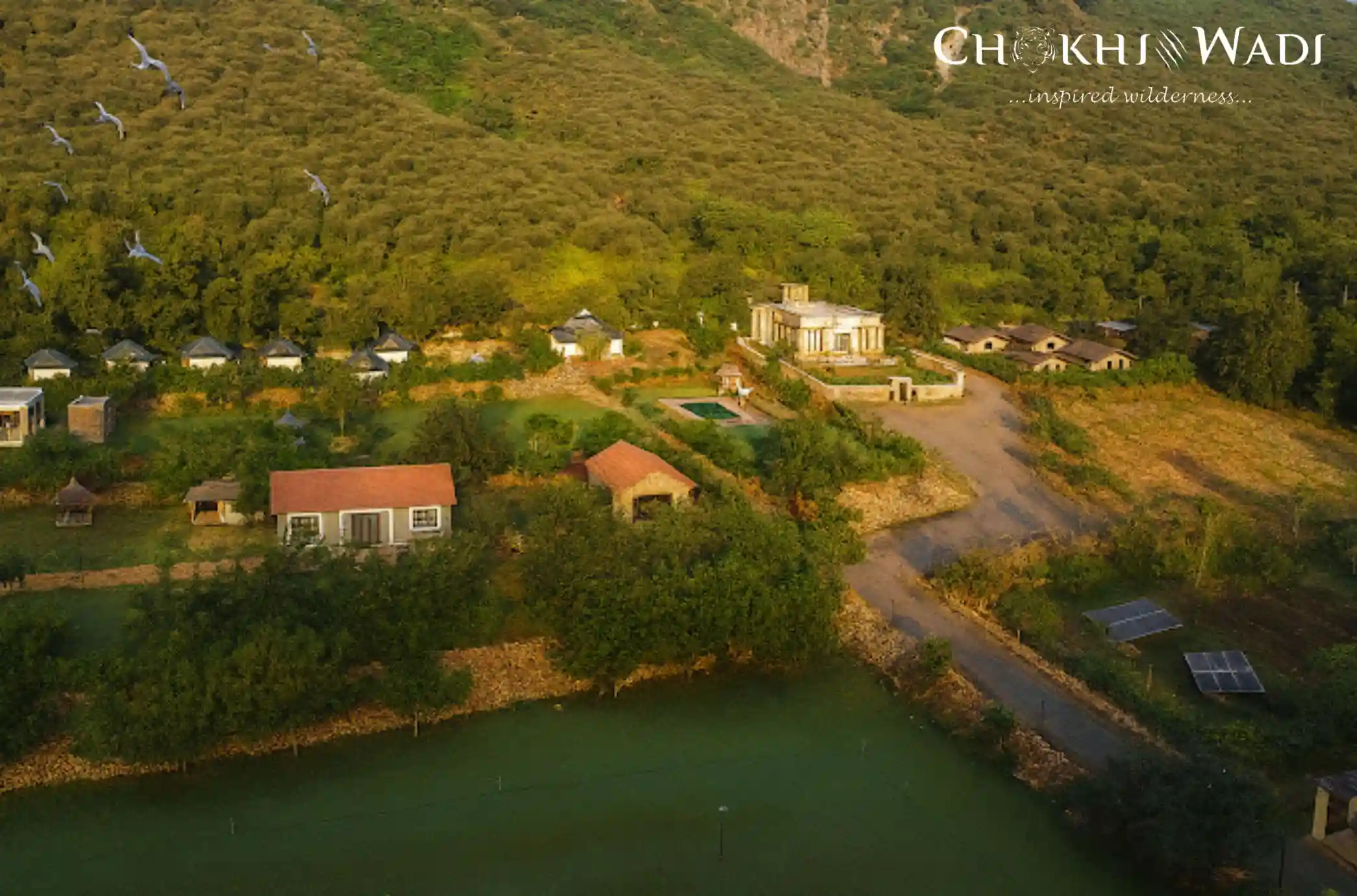
Chokhiwadi Forest Retreat in Ajabgarh, Thanagazi, sits within the Aravalli landscape, close to Sariska and within comfortable reach of Alwar. This 4 star hotel in Sariska offers eco-luxury accommodation across glamping tents, mud villas, and stone cottages. From Chokhiwadi, Bala Qila is a morning excursion, Sariska is a safari slot, and Neelkanth Temple is a forest drive. Evenings return to open-air dining, Rajasthani food, and the quiet of the Aravallis — the right kind of base for anyone taking the Alwar and Sariska region seriously.
FAQs
Q. What does Bala Qila mean and why is it called that?
Ans. Bala Qila translates to ‘Young Fort’ (or ‘High Fort’) from Hindustani and Persian roots. The mud fort on this hill dates to the Nikumbh Rajput period, and the stone fortification was extensively rebuilt under Hasan Khan Mewati in the 16th century (often dated locally to around 1550 AD).
Q. Is there a radio station inside Bala Qila and can I visit it?
Ans. Yes, the fort currently houses a radio transmitter station. The transmitter area is not openly accessible — visiting it requires obtaining prior permission from the Superintendent of Police, Alwar. The rest of the fort, including the palaces, temples, and outer structures, can be visited during normal timings (10 AM to 5 PM) without special permission.
Q. Why did Prince Salim (Jahangir) come to Bala Qila?
Ans. Prince Salim, who later became Emperor Jahangir, was exiled by his father Akbar after being implicated in the plot to kill Abul Fazal — one of Akbar’s closest courtiers and the author of the Ain-i-Akbari. Salim was banished from the Mughal court and spent time at Bala Qila. The section of the fort where he stayed is still known as Salim Mahal.
Q. How much time should I plan for visiting Bala Qila?
Ans. Most visitors spend 2 to 3 hours exploring the fort. Given the size — 5 kilometres north to south — and the climb involved, allow more time if you want to explore beyond the main gate area. Start no later than 2 PM to ensure you have sufficient time before the 5 PM closing. Carry water and wear comfortable footwear.