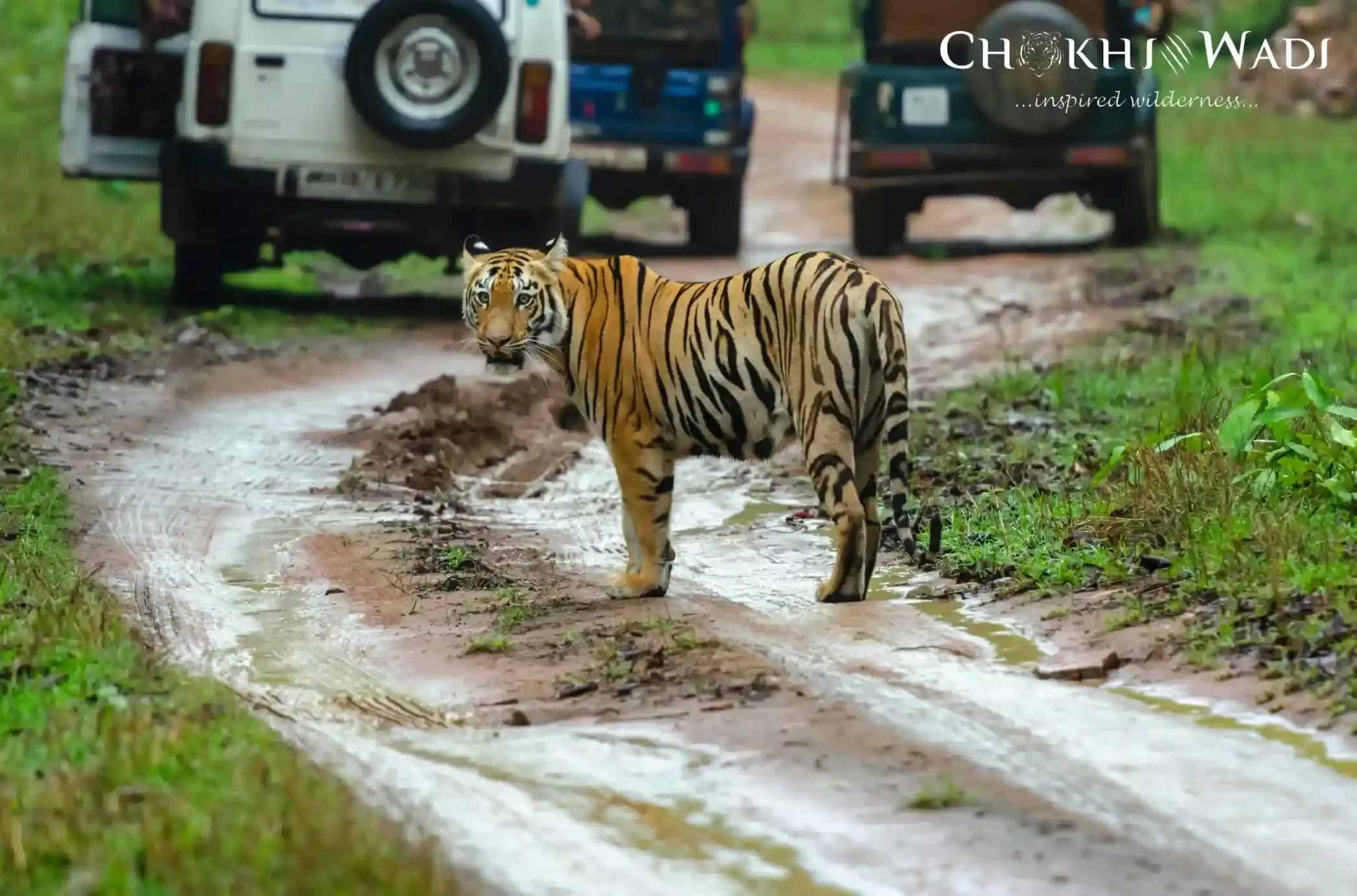
When people think of Sariska Tiger Reserve, tigers are usually the first animal that comes to mind. That’s fair, since the reserve is well known for its tiger reintroduction. But Sariska wildlife goes well beyond one big cat. The animals in Sariska Tiger Reserve also include Indian leopards, striped hyenas, jackals, sambar, chital, nilgai, and over 220 bird species. While jungle cats, caracals, chinkara, and wild boar are also documented here. There are also smaller, more elusive animals that are part of the reserve but are not easily seen.
Located in the Aravalli hills of Rajasthan, Sariska has a rich mix of wildlife that makes a safari interesting even when you do not spot a tiger. However, just because an animal is found in the reserve does not mean you will necessarily see it during your safari. Sightings depend on animal movement, habitat, season, and a bit of luck. This guide covers the animals found in Sariska and what you can realistically expect to spot. And if you are planning an early-morning safari, staying at a resort in Sariska makes the timings much easier to manage.
Wildlife Diversity in Sariska Tiger Reserve
Sariska sits in one of the oldest mountain ranges in the world, the Aravalli hills. This is why the wildlife in Sariska Tiger Reserve changes so much from one stretch of the drive to the next. The reserve is mostly dry deciduous forest, with patches of thorn forest, open grassland, rocky ridges, and narrow valleys.
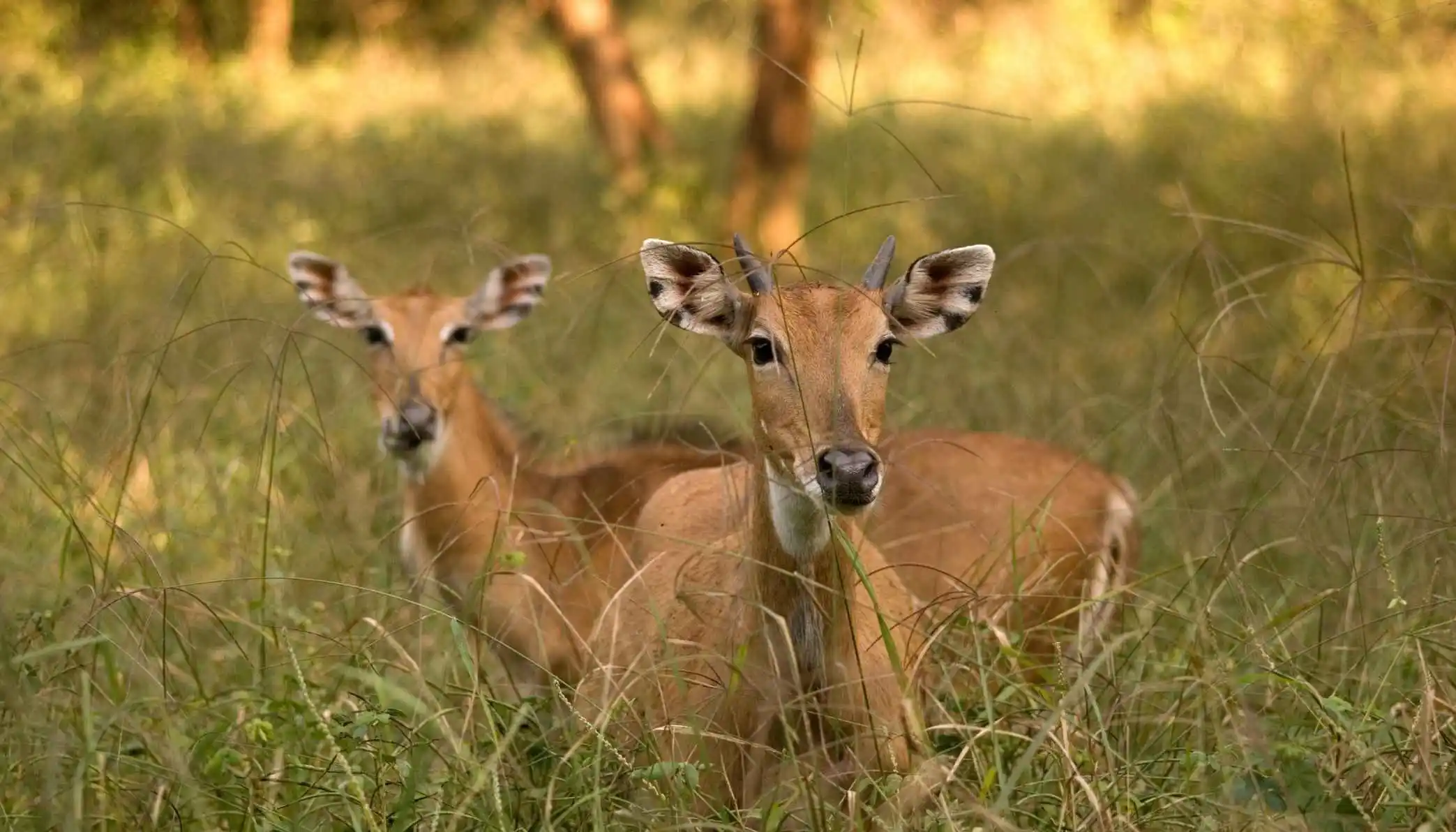
That mix of habitats is what supports so many species. Sambar prefer the wooded plateaus and grassy slopes, while nilgai are usually seen in more open ground, often near the edges of the forest. Sambar and nilgai are both plentiful here, and they are a big part of why tigers and leopards can survive in the reserve. They play an important part in the food chain that supports these predators. Langurs and peafowl are easy to notice around the rocky patches and clearings, and they often give away a predator’s presence with their alarm calls.
Beyond these larger mammals, Sariska has a varied bird population, reptiles, amphibians and smaller creatures. Dense, tall forest along streams and valleys suits birds like the crested serpent eagle, brown fish owl and Tickell’s blue flycatcher, while open scrub and dry ground suit partridges, quails and sandgrouse. So the animals you notice on a drive often depend on the safari zone you are passing through.
To know more about the wildlife, you can read a guide to the best time to visit Sariska for wildlife and safari.
Mammals in Sariska Tiger Reserve
The mammals in Sariska Tiger Reserve range from large predators to shy, mostly nocturnal animals that few visitors ever see. The animals found in Sariska fall into three groups that connect to each other: predators, the deer and antelope they depend on, and a smaller set of mammals that fill the gaps in between.
Bengal Tiger
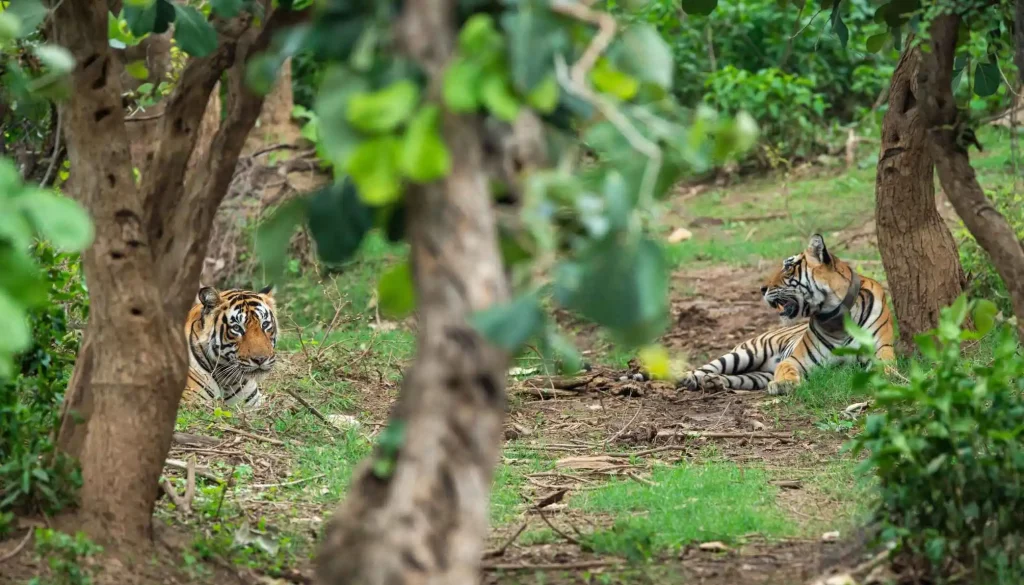
The Bengal tiger is Sariska’s main attraction, and its return is also one of India’s most important conservation stories. Sariska lost its entire wild tiger population by 2004-05, largely due to poaching. The first male was brought in from Ranthambore in June 2008, followed by females in July 2008 and February 2009. According to the NTCA, this was a first of its kind in the world.
The first sign of breeding success came in 2012, when tigress ST-2 gave birth to cubs, and the population has grown steadily since. A June 2026 government update put Sariska’s tiger count at 56, a strong recovery in about two decades. It is also important to note that leopards share the same landscape and do not know that tigers roam over large areas, so even with a growing population, a sighting is never guaranteed.
Leopards and Other Predators
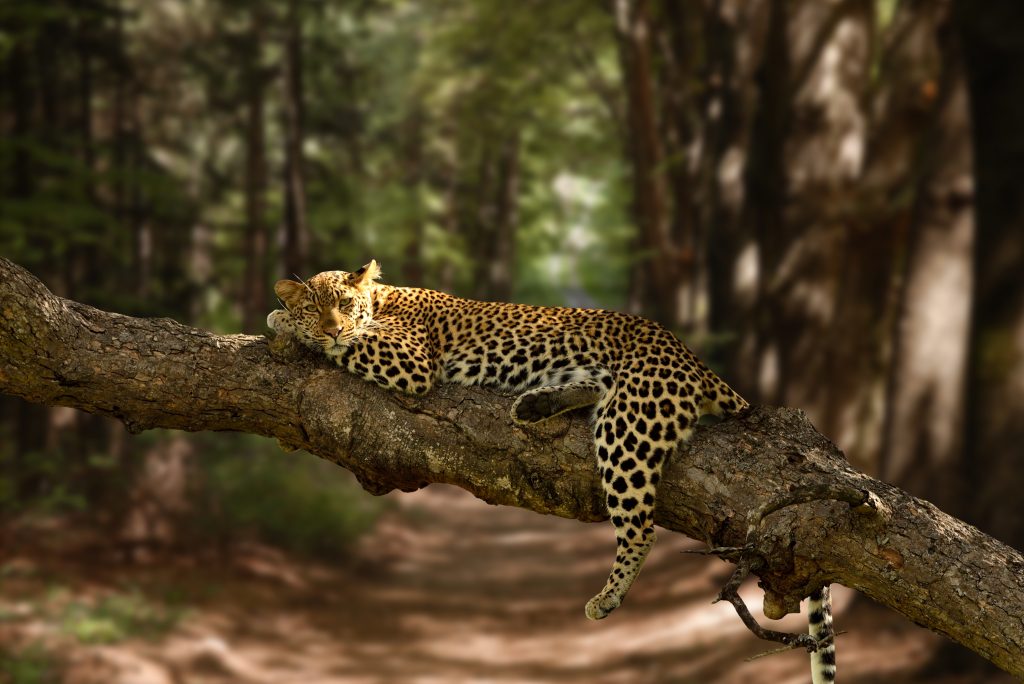
ell in the rocky hills. They are present but elusive, so visitors tend to remember a leopard sighting for a long time. Sariska also has records of smaller wild cats, including the jungle cat, the rusty-spotted cat and the caracal, which is easy to recognise by its long, black-tufted ears. Most of these cats are active at night or at the edges of the day, and the caracal in particular is rarely encountered.
Striped hyenas and golden jackals round out the carnivores. Hyenas are mainly scavengers, and they help the forest by clearing away carcasses. For the full list of documented species, see the Forest Department’s Tiger Conservation Plan.
Deer and Antelope Found in Sariska
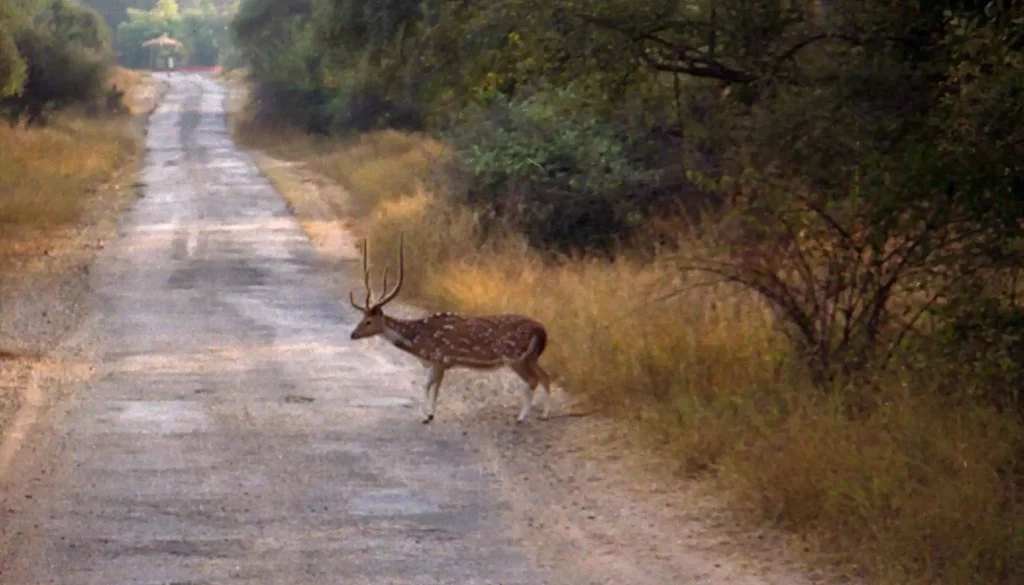
These are the animals you are most likely to see on a safari, and they make up much of the prey base for Sariska’s big cats. Sambar, nilgai, chital, four-horned antelope, and wild pig are the reserve’s principal herbivores. Sambar are large, dark, and often still, and they stay close to wooded slopes. Chital, or spotted deer, usually move in groups, and their sharp alarm calls can warn the whole forest that a predator is near. Nilgai, also known as the blue bull, are the big, grey-blue antelope you will often see on more open ground.
Chinkara are also documented here, but they and the four-horned antelope are shy and easy to miss, so treat them as a pleasant surprise rather than something to expect. The wild boar looks quite different from the deer and antelope around it, with a sturdy build and a long snout, and it is often seen in small family groups.
Monkeys and Other Smaller Mammals
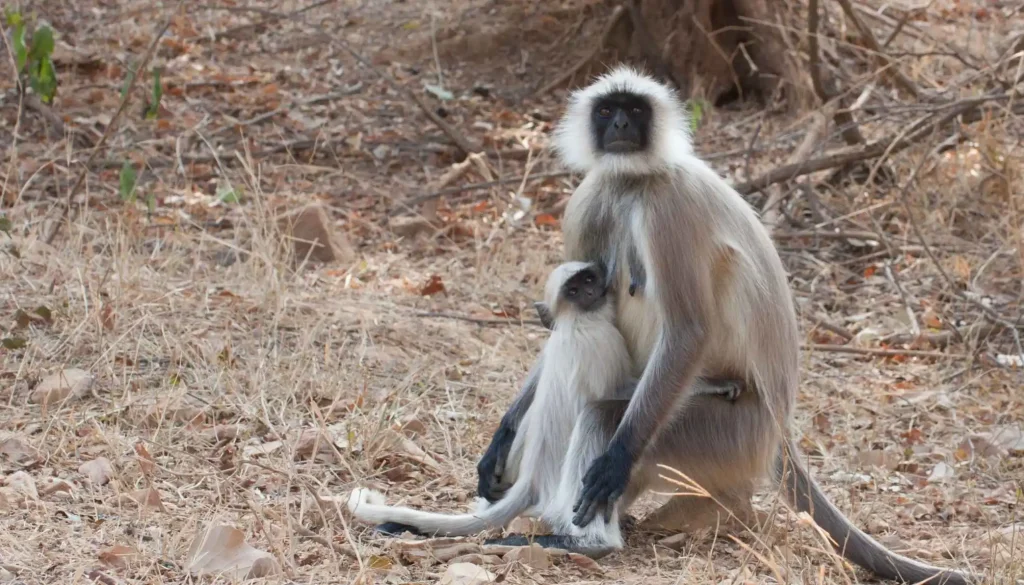
Common langurs and rhesus macaques are the most visible mammals in the reserve. You may see langurs sitting on tree branches or moving between trees, while rhesus macaques are particularly associated with the Talvriksh area in older wildlife records. They are especially useful to watch, because a langur calling loudly from a treetop often means a predator is moving below.
Other documented mammals include the Indian crested porcupine, Indian hare, small Indian civet and different mongoose species. Porcupines are recognised by their sharp quills, which they raise as a defence when threatened. Civets, on the other hand, are much harder to spot because they are mainly active at night.
These animals may not attract the same attention as a tiger, but they add another dimension to the wildlife found in Sariska. Before your visit, it also helps to understand the basic Sariska wildlife safari rules and precautions to follow during your drive.
Birds in Sariska Tiger Reserve
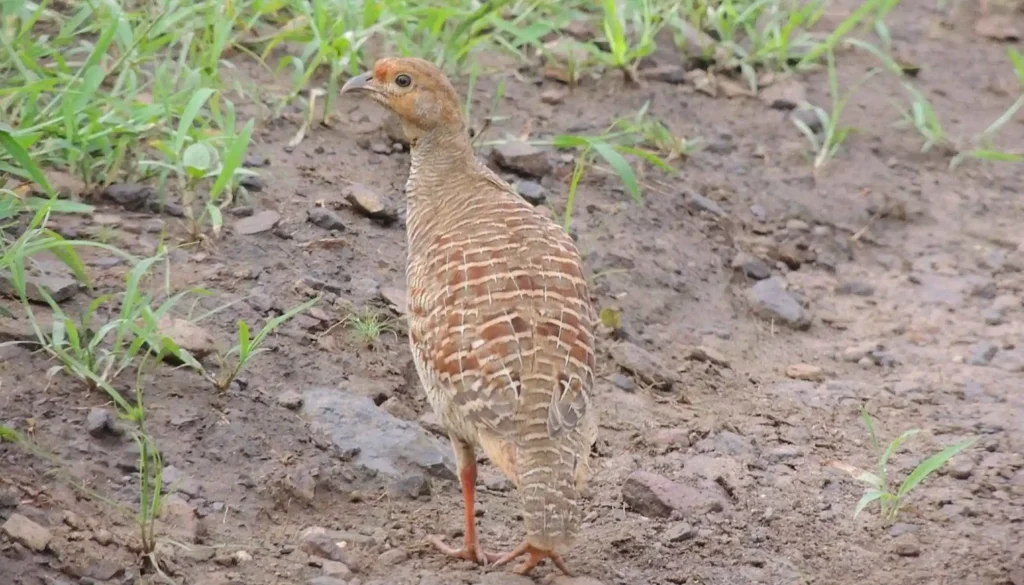
The birds in Sariska Tiger Reserve are as varied as the mammals. The reserve is home to more than 220 bird species, including Indian peafowl, grey francolin, painted and Aravalli red spurfowl, sandgrouse, crested serpent eagles, white-rumped vultures and owls, along with seasonal visitors such as the Indian pitta. While many species are residents, winter migrants make up a large share of the rest. That means the birds you notice depend a lot on where you are and when you visit.
Peafowl and Other Ground-Dwelling Birds
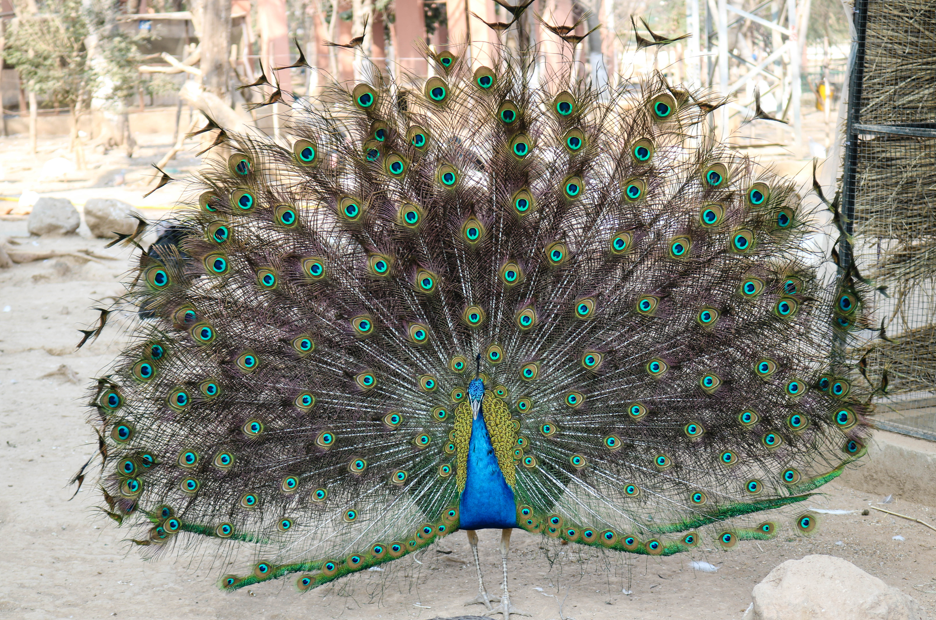
The Indian peafowl is one of the more familiar birds found in Sariska. You may see it walking across an open patch of forest or moving between trees. During the breeding season, males display their long, colourful tail feathers to attract females.
Other ground-dwelling birds are grey francolins, jungle bush-quails, painted spurfowl and Aravalli red spurfowl. Unlike peafowl, these birds are not always easy to spot. They often remain close to the ground, moving through grass and undergrowth. You may hear their calls before you actually see them. The painted spurfowl is particularly associated with undisturbed forest patches, making it an interesting bird for those who enjoy looking beyond the more familiar species.
Eagles, Vultures and Other Birds of Prey
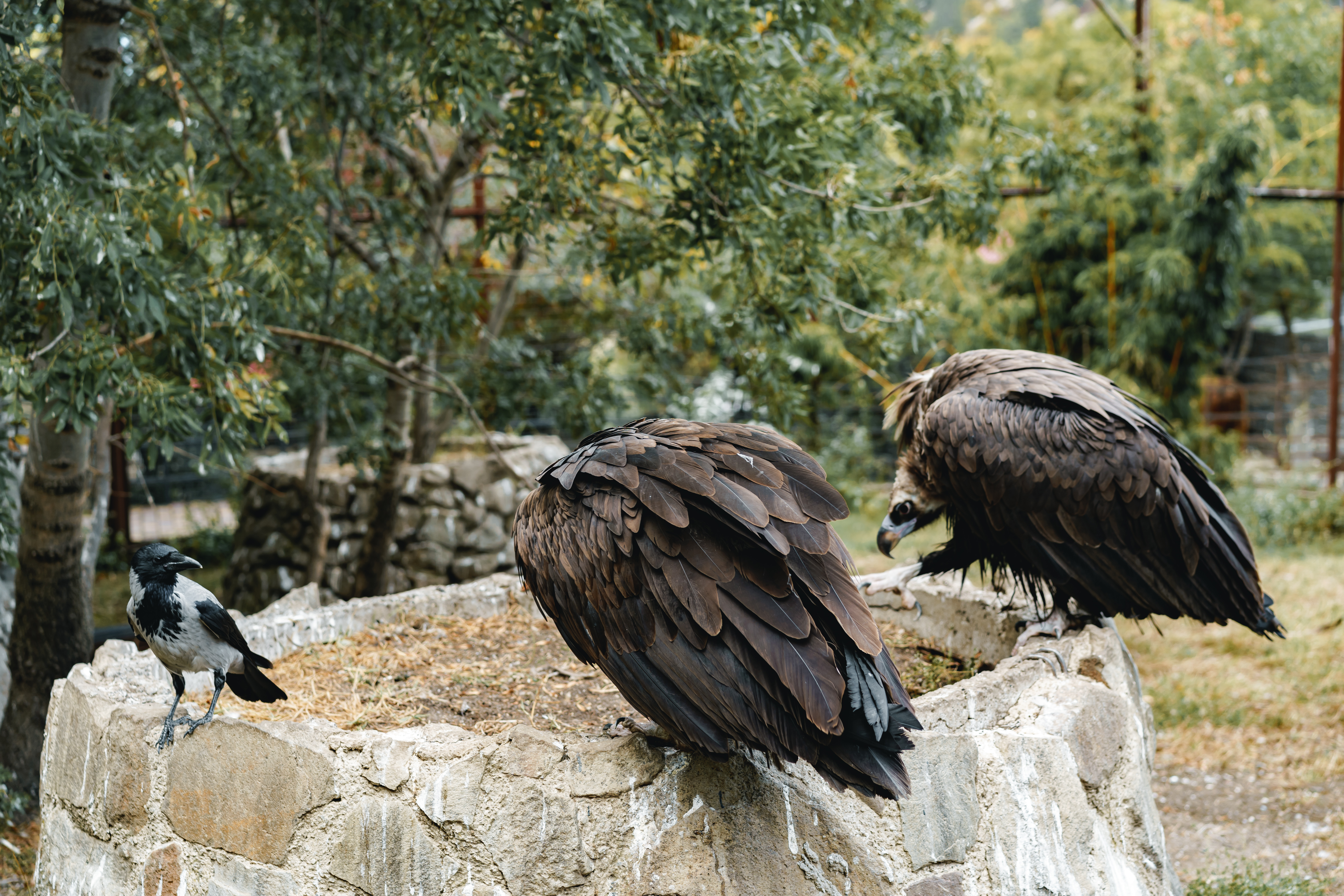
Look towards the higher branches and open sky, and you may notice some of Sariska’s birds of prey. The crested serpent eagle is one of the notable raptors recorded in Sariska. It is a forest-dwelling eagle that feeds mainly on snakes and other small animals.
Shikras and falcons are also part of Sariska’s birdlife. Vultures are another important group, including the white-rumped vulture, long-billed vulture, and red-headed vulture. They feed on animal carcasses and play an important role as scavengers in the ecosystem.
However, these larger birds are not all equally common. A wildlife survey recorded some vulture species only on a few occasions. So, while they are part of Sariska’s documented birdlife, seeing one during a safari is no less than a bonus.
Owls and Other Woodland Birds
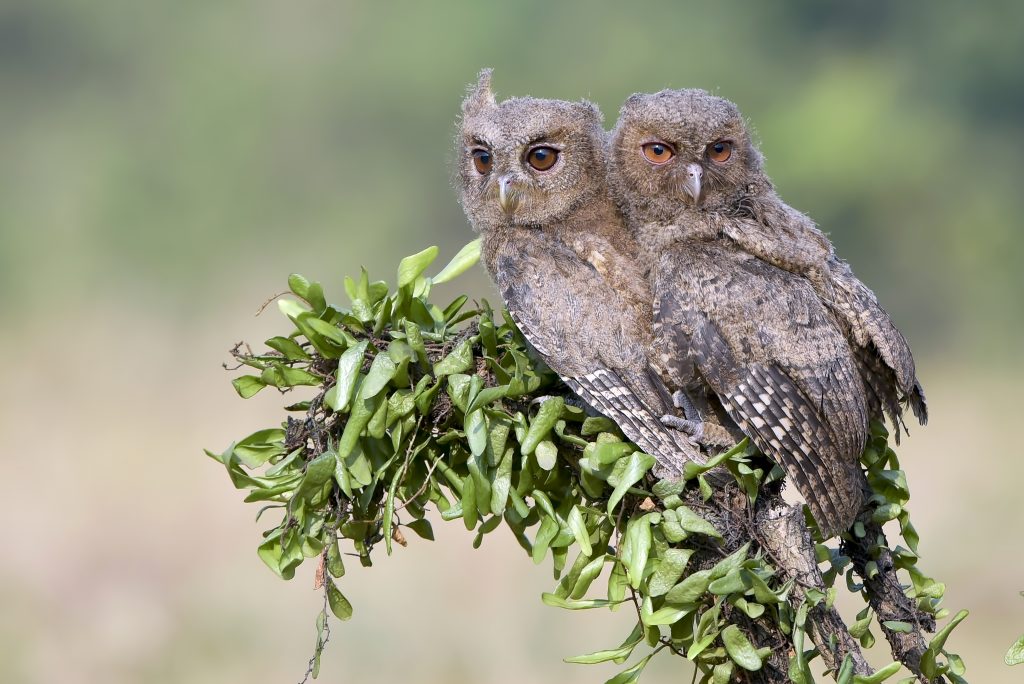
Sariska also has birds that are easier to miss during a daytime wildlife drive. Owls are mostly active at night, so a daytime safari rarely turns them up. Even so, the Eurasian eagle-owl has been recorded at Kankwari and Pandupole, and the brown fish owl is associated with streamside forest. You may also come across records of the Indian nightjar, a bird that is more active around dusk and at night. Among smaller woodland birds, the brown-headed barbet, red-whiskered bulbul and Tickell’s blue flycatcher add to the variety.
Waterbirds and Seasonal Visitors
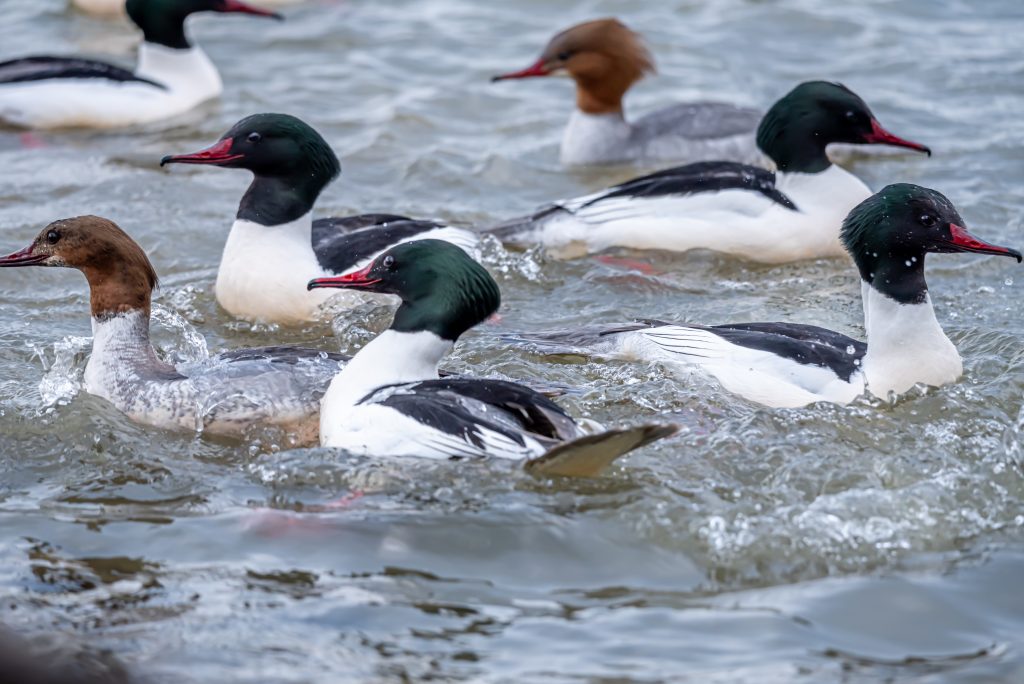
The water bodies around Sariska bring a different group of birds into the picture. Ducks, waders and other water-associated birds form part of the reserve’s recorded birdlife. Species such as the pheasant-tailed jacana and white-capped water redstart have also been documented.
In winter, the reserve receives migratory birds from Europe, Central Asia and other regions, which makes the cooler months a good time for birdwatchers. The monsoon brings a different highlight: the Indian pitta, a colourful forest bird that arrives in summer and the monsoon months and is best looked for in shaded, undisturbed patches. So what you see will vary with the season and local conditions, which is why the same trail can feel rewarding on one trip and quiet on the next. If birdwatching is your main goal, winter is good for migrants, while the monsoon is worth considering for the pitta.
Reptiles and Other Smaller Wildlife in Sariska
Not everything worth noticing in Sariska has fur or feathers. The reserve also has reptiles and other smaller wildlife that add to its biodiversity, even if they are not always easy to spot on a safari.
Snakes and Lizards
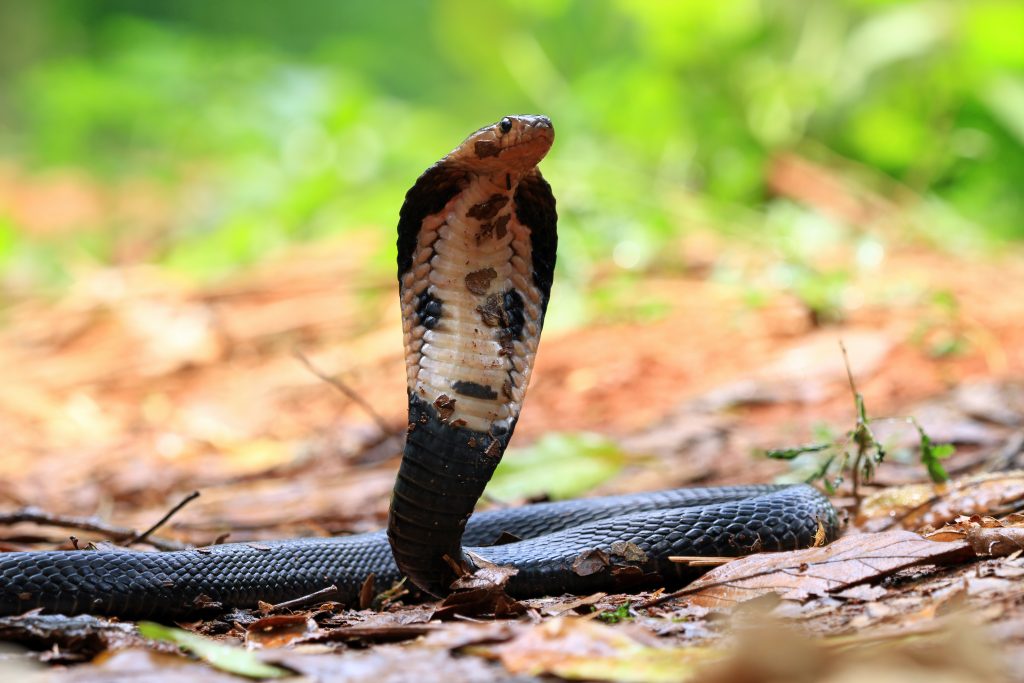
Sariska is home to several reptile species, including the Indian rock python, Bengal monitor lizard, Indian cobra, common krait, rat snake, Russell’s viper and saw-scaled viper. The Bengal monitor is the one you are most likely to notice. It is a large lizard with a strong body, sharp claws and a forked tongue. It is an active hunter and feeds on insects, small animals and other available prey. Unlike snakes, monitor lizards are often seen moving along the ground or around rocky areas.
The Indian rock python is a large, non-venomous snake that relies on camouflage to stay hidden. Cobras, kraits and vipers are part of the reserve’s reptile diversity, but you should not expect to see them on a regular safari.
Mugger Crocodiles
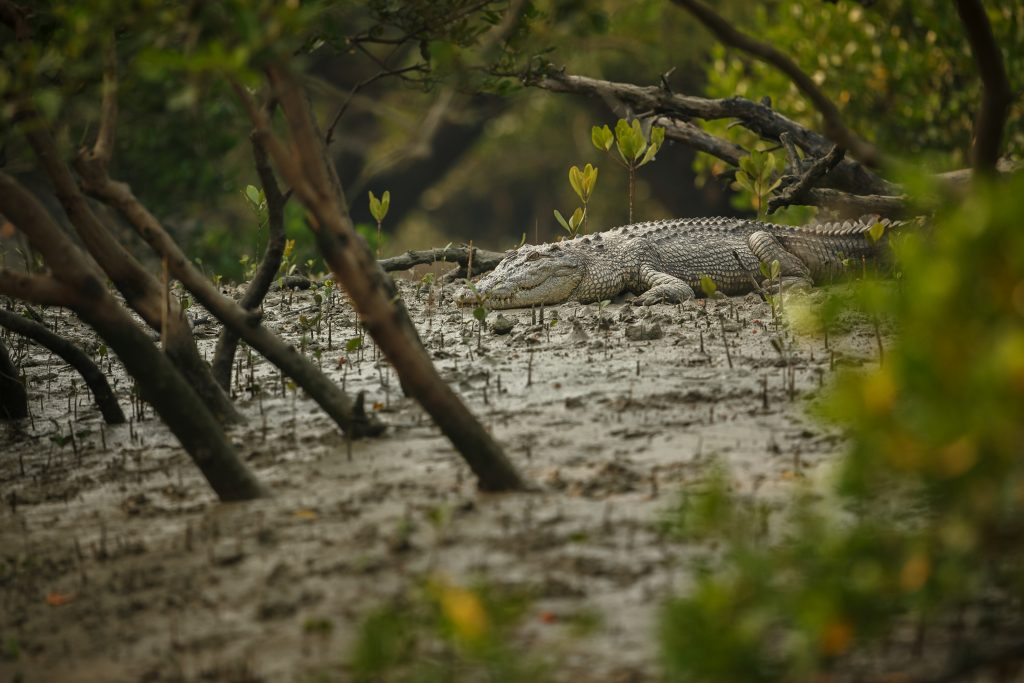
The mugger crocodile, a freshwater species linked to rivers and lakes, has also been mentioned among Sariska’s reptiles. It feeds on fish and other animals, but a sighting should not be treated as a safari expectation.
Butterflies and Other Smaller Wildlife
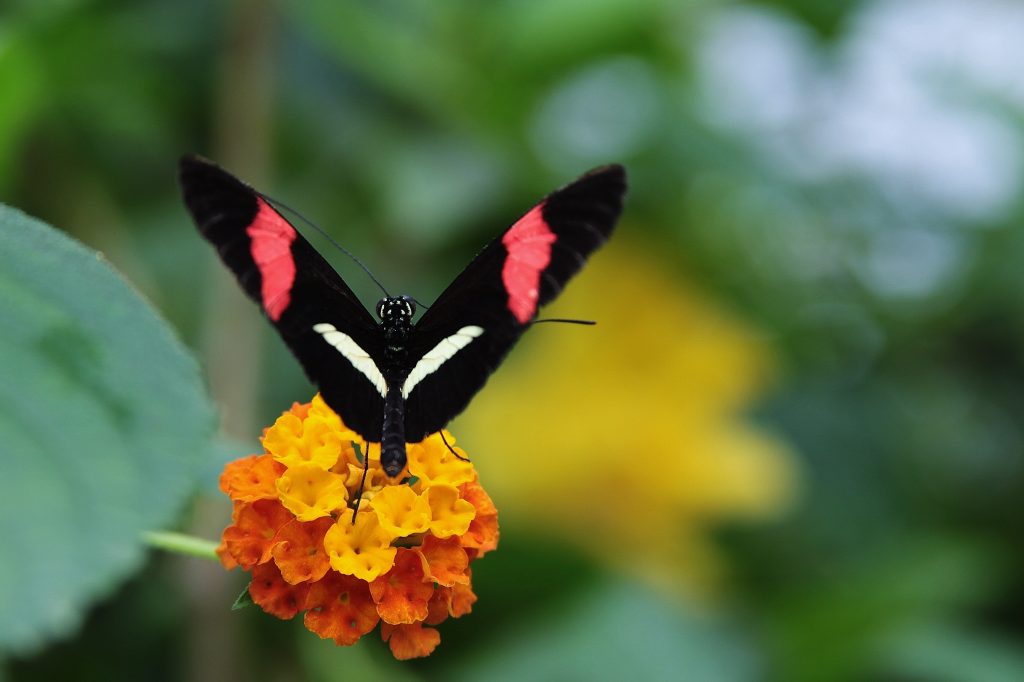
Butterflies are another interesting part of its biodiversity that are easily overlooked. They may not attract the same attention as tigers or birds of prey, but their presence adds colour and activity to the forest. The Rajasthan Forest Department also published a dedicated Pocket Guide for Butterflies of Sariska Tiger Reserve in October 2025, reflecting the importance of this often-overlooked group of wildlife.
Which Animals Can You Actually Spot During a Sariska Safari?
A safari in Sariska can bring different wildlife encounters, but not every animal is equally easy to spot. You may book the safari for the tiger, but most drives in Sariska are made of smaller moments: a sambar frozen mid-step, a langur scanning the ridge, a peacock calling from the rocks.
Here’s a realistic picture of how likely you’re to see them:
- Most likely: Sambar, chital, nilgai, wild boar, langurs, macaques, peafowl and other common birds. These are plentiful and active in daylight.
- Possible, with patience and luck: Tigers and leopards are present but cover large areas and stay hidden, so a sighting is never guaranteed.
- Rarely seen: Caracals, hyenas, jungle cats, porcupines, civets, owls and snakes are mostly nocturnal or well hidden. Treat any sighting as a bonus.
- Clues to watch for: A chital’s alarm call, a langur calling from a treetop, sudden stillness among deer and pugmarks on the track often mean a predator is nearby.
Tips for Watching Wildlife in Sariska
A few simple choices can make a real difference to what you see:
- Go with a registered wildlife guide: A registered guide is required with tourist vehicles entering Rajasthan’s protected areas. He can help you understand animal behaviour, identify species and notice signs of wildlife that you might otherwise miss.
- Take the morning slot. The air is cooler, animals are more active and the forest is quiet. It is also the best time to hear alarm calls.
- Know your zones: Sariska has five safari zones on two gates. Zones 1, 2 and 3 start at Sariska Gate, and Zones 4 and 5 start at Tehla Gate. Check the official booking portal for current routes and rules before you plan around one.
- Match the season to your priority. From April to June, animals gather around shrinking waterholes, though it gets very hot. From October to March the weather is comfortable and winter birds are around.
- Keep noise down and give animals space. Do not chase or crowd an animal. A calm vehicle is far more likely to see natural behaviour.
- Carry binoculars and a zoom lens. Both help with birds and distant animals. Switch off the flash, as it is not allowed.
- Plan more than one safari. Each drive is different, and two or three give you a much better picture of the reserve.
Where to Stay
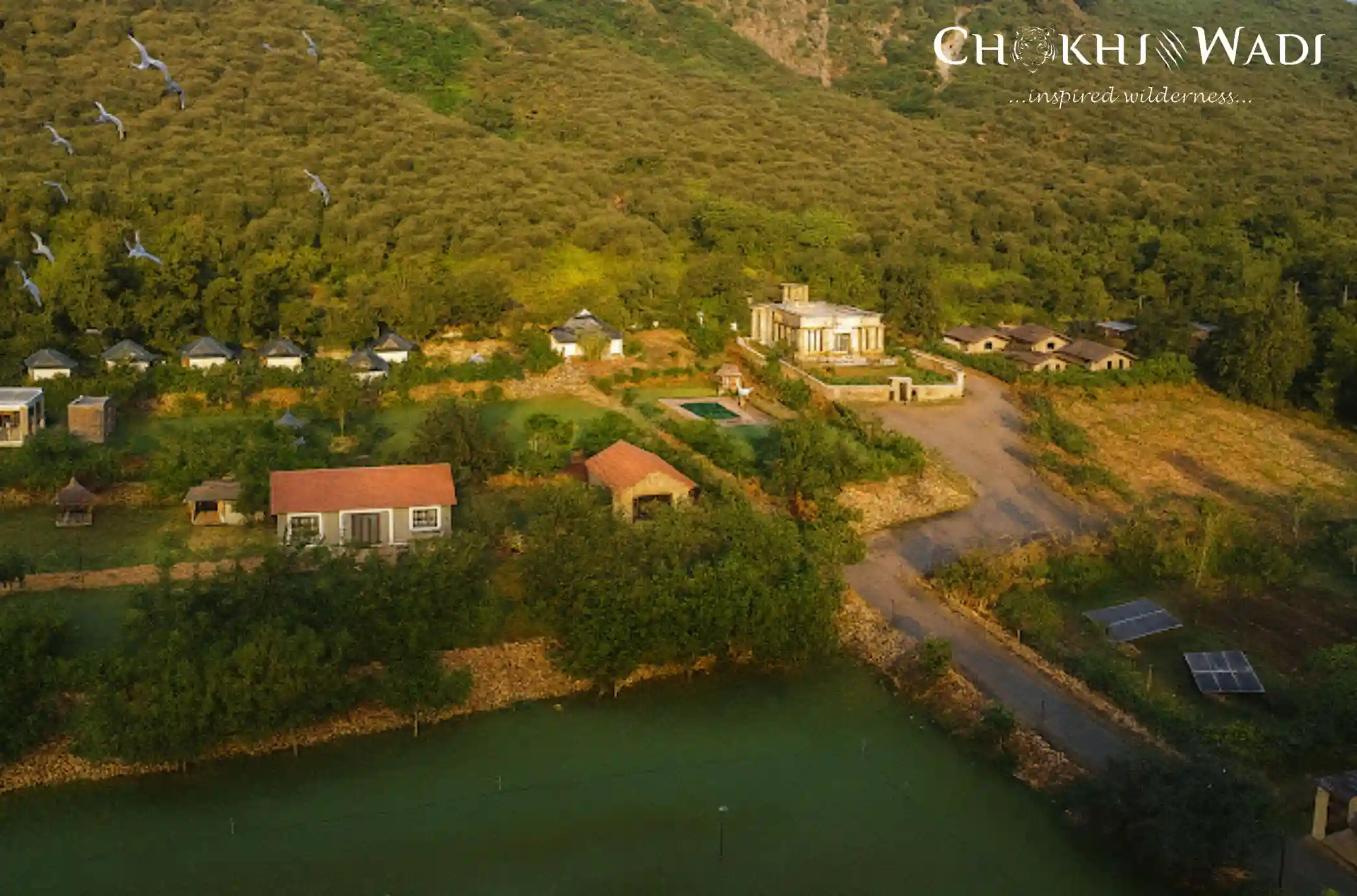
Safari slots start at first light, so having a comfortable stay in Sariska makes the trip much easier. You get a proper night’s sleep, skip the long pre-dawn drive and have more energy for spotting birds and animals. It also makes it easy to rest between drives and plan the next outing.
Final thoughts
The animals in Sariska go well beyond tigers. Go with realistic expectations, take an early slot and keep your eyes open for the smaller moments. And, if you are planning a wildlife trip, book a resort in Sariska and make the early safari mornings easier.
FAQs
Q. What animals can you see in Sariska Tiger Reserve?
Ans. Sariska is home to Bengal tigers, leopards, jungle cats, sambar deer, chital, nilgai, wild boar, hyenas and monkeys. The reserve also has a variety of birds and smaller wildlife.
Q. Are tiger sightings guaranteed during a Sariska safari?
Ans. No. Tigers roam freely across the reserve, and their movements depend on several natural factors. You may notice pugmarks or hear alarm calls without actually seeing a tiger during your safari.
Q. Can you spot leopards in Sariska?
Ans. Yes, leopards are found in Sariska, but they are elusive and often difficult to spot among the rocky terrain and forest cover. A sighting depends on luck and animal movement.
Q. Does Sariska have migratory birds?
Ans. Yes. Sariska has over 220 bird species and also receives migratory birds from Europe, Central Asia and other regions. Winter is an interesting time for birdwatching, although the species you encounter can vary with the season.
Q. Are there elephants in Sariska?
Ans. No. Elephants are not listed among Sariska’s documented wildlife.
Q. Is Sariska good for wildlife photography?
Ans. Yes, especially for deer, langurs, peafowl and other birds. Carry a zoom lens, and keep in mind that flash and drones are not allowed.